An Effective 6 Week Plan to Give Up Smoking

I am not sure how many people there are out there who still smoke, but if you are one of them – or know someone who is – then this new book claims to help, even if you have no willpower! Think I will pass it on to the group who huddle out in the shelter of the doorway outside our choir rehearsal room whenever we have a break!
‘Love Not Smoking’ (£8.99) is the brainchild of Professors Karen Pine and Ben Fletcher and what it offers is a simple, effective, 6 week programme that guides the reader into being smoke free for good without beating them over the head with a sharp implement every time they reach for a cigarette. Leave the beating over the head to their fellow non-smokers!
Professors Ben (C) Fletcher and Karen Pine are both professors of psychology at the University of Hertfordshire and have pioneered successful behaviour change using their Do something Different technique and their research is internationally recognized, published in academic journals and presented at conferences worldwide.
They focus on motivating the smoker to quit so they can realise that they’ll “love not smoking” and get to put lots more back into their life. Giving up smoking does leave a void, so the book doesn’t preach or lecture the reader about how much they’ve smoked in the past or why they should be giving up now. Its unique approach is more holistic in its outlook and treats the individual’s psychology and their behaviours, not just their habit.
The authors’ tools and techniques are based on groundbreaking research about why people get trapped or stuck with particular habits and then enable them to break free. At its simplest it is about recognizing habits and patterns (like always having a cigarette after a meal, or with a coffee) and offering suggestions on how to change to make quitting easier.
It is all about doing something different and not being judgmental or beating yourself up if you haven’t managed to quit before. They suggest you forget willpower and withdrawal – or even the crutch that is the nicotine patch – and with this powerful method they claim you can break the cycle and pattern of smoking. With daily tasks, inspirational ideas and a wide range of instant habit-breaking tools you even get a Love Not Smoking support network on Facebook where you can share stories and get support from fellow quitters.
If you order a copy now you will have read it in plenty of time for NO SMOKING DAY on March 9th – could be a great day to start putting a plan into action – and if you have a Kindle reader there is a free download of an extract from the book at Amazon, just go here: Start to Love Not Smoking: Free Introductory Extract
March 2011 Update: The Love Not Smoking App for Iphone & Andriod is available now!
If you are a smoker, or have a loved one who smokes and wants to quit then the Love Not Smoking App will help you on your journey. It’s National No Smoking day on the 9th March so there’s no better time to start afresh and stop smoking for good.
This unique, six week scientifically-proven psychological programme retrains your brain, breaking old smoking habits and changing your life for good. The programme gets you ready gradually for your first smoke-free day, then provides daily bursts of advice and support to establish your new, smoke-free life. It has a wide range of tools including:
Daily tips, tasks and alerts
Inspirational videos from the authors
Illustrated Habit-Breaker cards
Addictive games for those Twitchy Finger moments
Inspire Me! messages to help you beat your cravings
Money Saved calculator
Love Not Smoking wallpaper for your iPhone or iPad
Advice and ideas from the Love Not Smoking Facebook support group
Integration with Twitter and email to help spread the word to your loved ones
Check out more info here:
www.hayhouse.co.uk/lovenotsmokingapp
The Benefits of Controlling Humidity to Control Viruses

This time of year I seem to be surrounded by people coughing and sneezing, to say nothing of the alerts over swine flu, so it seemed timely that I came across a new study by researchers from the Harvard School of Public Health which shows that, by controlling humidity indoors, humidifiers have a potential positive impact in reducing the survival of influenza viruses in the home.
Maintaining indoor humidity at a level of 40 to 60 % actually reduces the risk of transmission of influenza viruses. Unfortunately, during winter, indoor air can have a humidity level as low as 10%, posing a risk factor particularly for the elderly and very young.
Humidifiers not only regulate the level of humidity in indoor air, but are also recommended by doctors when someone suffers a cold. They help loosen congestion and soothe a sore throat. This is especially important for children, since their smaller nostrils get bunged up more easily.
I can remember when central heating first became popular (don’t’ work out my age from that please) it was common to find bowls of water laid down in the hearth or dotted strategically round the room to put some more moisture into the air, but happily technology has caught up.
I was sent a humidifier to try that has been recommended by Vick’s, and that brings back other childhood memories of red flannel and very cold winters, but I digress again. It is a first resort for helping a bunged up nose and the VH5000 Cool Mist Mini-Ultrasonic Humidifier will help to reduce the survival of flu viruses and ease conditions such as a dry nose, throat, eyes and skin discomfort.
It is certainly small, quiet, and inconspicuous which is a big plus in its favour for me and runs for up to eight hours, so ideal in a bedroom. It gives out a cool mist, so is suitable to use around children and it can also be used with Vicks menthol scent VapoPads that also help relieve congestion and cold symptoms – and you needn’t wear the red flannel unless you want to. I didn’t have a cold, but I found that it helped me sleep better as the Vick menthol helped prevent a stuffy nose, which can sometimes keep me awake. The cat sleeping on my head probably doesn’t help either!
If you want to improve the air quality of your home, and have the best conditions for avoiding colds and flu then you will find the VH5000 Cool Mist Mini-Ultrasonic humidifier in pharmacies and stores such as Boots.
Why You Shouldn’t Eat Fish in Montreal or any Major City
February 2, 2011 by AnnA
Filed under Health, Medical Research & Studies
We are usually exhorted to eat more fish, and indeed if you can guarantee the source then it is a good idea, but a major problem could be about to hit us. This is based on a study from Montreal which shows that around one in four citizens there take some kind of anti-depressant and, according to new research, the drugs are passing into the waterways and affecting fish.
I don’t imagine Montreal is that different from other major cities that connect to a waterway, and we already know that synthetic hormones from HRT and the Pill find their way into our water system. The findings are internationally significant as Montreal’s sewage treatment system is similar to that in use in other major cities, and moreover, it is reputed to be the third largest treatment system in the world. Dr. Sébastien Sauvé at the University of Montreal’s Department of Chemistry has found that the drugs accumulate in fish tissues and are affecting the fish’s brain activity.
Sauvé has been looking at the chemical pollution of the water system for years and said “Montreal has a very basic sewage system and the chemical structure of anti-depressants makes them extremely difficult to remove from sewage, even with the most sophisticated systems available. We know that antidepressants have negative side effects on human beings,” Sauvé said, “but we don’t know how exactly how these chemicals are affecting the fish, and by extension, the Saint Lawrence River’s ecosystem.”
Research is at an early stage, and there is no evidence to date that the release of antidepressants into the water is affecting brain activity in humans but you might want to check that your fish comes from deep, deep water and not an inland source!
The Positive Side of Coffee
February 1, 2011 by AnnA
Filed under featured, Food & Nutrition, Health, Medical Research & Studies

If you have forsworn the beverage as part of your New Year healthy eating plan you may want to rethink as new research is showing some benefits you won’t want to pass up on. Personally coffee, like butter, is something I have never given up on but have cut down to two cups a day because my health philosophy has always been everything you want in moderation.
Coffee is actually one of the richest sources of antioxidants there is and remains so however you drink it as its high antioxidant content of the coffee is still absorbed easily by the body. Antioxidants help to protect our cells from free radical damage caused by oxidative stress – a fact that is backed up by hundreds of intervention studies on polyphenols and polyphenol-rich foods including coffee.
According to Gary Williamson, Professor of Functional Food, School of Food Science and Nutrition at the University of Leeds, “Coffee is in my top 20 lifespan essential foods.” Many people can’t start their day without it and if you want a quick and high oxidant boost then look for Nescafe have even developed a special blend that is higher in antioxidants than their standard coffees so look for their Green Blend in supermarkets.
Other Caffeine Benefits:
A new review has indicated that antioxidant supplements may benefit couples who have difficulty conceiving naturally. The review provides evidence from a small number of trials that suggest the partners of men who take antioxidants are more likely to become pregnant so coffee could well play a part in that antioxidant increase.
Another new study also shows that caffeine energizes cells, boosting virus production for gene therapy applications. Now why would that concern you? Well it helps move research forward faster because if you give caffeine to cells engineered to produce viruses used for gene therapy then those cells can generate 3- to 8-times more virus, according to a recent paper published in Human Gene Therapy.
Lentivirus vectors are commonly used for transferring genes into cells for both research applications in the laboratory and, increasingly, for gene therapy procedures in clinical testing. The addition of caffeine should significantly decrease the cost of lentiviral production for research and clinical uses and James M. Wilson, MD, PhD, Editor-in-Chief, and Director of the Gene Therapy Program, Department of Pathology and Laboratory Medicine, University of Pennsylvania School of Medicine, Philadelphia can certainly see the advantage. “It is ironic that the ingredient in beverages like colas and coffees that helps keep us awake and alert is also useful in jazzing up cells to produce more gene therapy vectors. An increase in vector production of 5-fold may prove critical in establishing the commercial viability of lentiviral based products.”

The Practical Benefits of Tai Chi for Health and Circulation

The latest guidelines for preventing falls in the elderly in the USA have urged health professionals to look at interventions including exercise such as Tai Chi for balance, gait and strength training. With NHS treatment costs for falls coming in at £4.6m a day it could certainly save precious resources, and you could improve your own health in a very enjoyable way. I have often mentioned various health benefits of Tai Chi, and these usually come from research sources, so I thought it would be more helpful to hear from a practitioner on what they see as the real gains.
Jon Wallwork had suffered a spinal injury and was left with painful sciatica. Regular, dedicated practice over several months saw the sciatica diminish and within a year the condition had normalised (much to the surprise of the orthopaedic surgeon). He teaches in London and for P&O on some of their cruises and he is convinced of the health gains that can come from Tai Chi – whatever your age.
“It’s a very common perception that the practice of Tai Chi will lead you through moving meditation to this state of nirvana, this freedom from suffering. Well, dependent on your intention, attitude and goals it may do but there are real, practical benefits that have a more immediate relevance for anyone interested in maintaining a degree of good health and fitness whatever their age.
• Good posture arises in the lower back and spreads downwards to the legs through the pelvis and upwards to the head, through the spine and shoulders. Good posture depends upon good muscle tone in the centre of your body and exercises in Tai Chi training will help you develop such muscle tone and improve your posture.
• Mobility is the measure of the range of motion in the joints and good mobility aids agility and reduces the risk of injury. The range of movement found in Tai Chi forms combined with stretching exercise will considerably improve mobility.
• Co-ordination and agility can be enhanced through activity involving closely focused movements, balance and interaction with other people or equipment. Both solo and partner work in Tai Chi provides this.
Natural Help for Poor Circulation:
Tai Chi is also very helpful for improving circulation, but if you feel you need some extra help then an excellent supplement is Kiwiherb’s Organic Ginger & Kawakawa Syrup. The stimulating combination of these two herbs literally warms the body from the inside out and helps to increase blood flow around the body and especially to the extremities, such as the fingers and toes, which often suffer most.
Ginger helps energise the senses, boost vitality and increase overall circulation, and also possesses antiviral, anti-inflammatory and immune-boosting properties. Kawakawa is one of the most widely used herbs in traditional Maori medicine to improve circulatory problems and the syrup also contains antibacterial Manuka Honey
Especially useful if you suffer from chilblains or Raynaud’s disease and, as an added bonus, this organic herbal syrup also helps improve circulation to the brain, which in turn helps awaken the mind if feeling lacklustre and mentally weary.
New Relief for Period Pain

Women who suffer from this have usually tried everything available from the simple hot water bottle to prescribed painkillers and some things work some of the time – but not always. A new treatment that is an effective, clinically proven, non-drug and non-heat alternative is to be welcomed to add to the options available.
Menstrual pain is caused by the uterus contracting, and the level of pain suffered from is dictated by the level of prostaglandins in the body, as this is what stimulates the uterus to contract and shed its lining. The Allay Patch has been designed to help the majority of women who suffer discomfort every month but will be invaluable for the 10% or more for whom it can mean excruciating and crippling pain that can temporarily disable them.
While painkillers (or non-steroidal anti-inflammatory drugs) are usually suggested, they are not always effective for the cramping and have side effects for regular use including the distress of gastric upsets. . Whilst the Allay patch cannot alleviate the severe pain associated with endometriosis, it can reduce a sufferer’s reliance on other, medicated forms of pain relief.
The Allay is a small wafer thin patch that is designed to be worn over the lower abdomen for anything from a few hours, to a few days. It contains a microchip that utilises pulsed electromagnetic field (PEMF) therapy to stabilise the membrane of the uterus cells and stops the release of pain. This has been used in hospitals and clinics worldwide since the 1930s in treatment of tissue trauma, and the Allay patch has been specifically designed to be a miniaturised and cost-effective version of this technology.
The natural electric balance in the cells is restored and actually helps to accelerate the body’s natural healing process, as it treats pain and swelling at the source.
Recent clinical trials showed that 77.1% of women who tried the Allay patch reported either complete elimination or reduction in their typical menstrual pain and discomfort. The trials concluded that the Allay patch could be offered as a primary, drug-free treatment method for women suffering from moderate menstrual cramping and in more severe cases of dysmenorrhea it could be used alongside other treatment to reduce the duration of, or to eliminate use of, oral medications.
The Allay Patch is £9.95 plus £3.95 P&P and you can find out stockists, or order, by calling 0844 272 5528 or visiting www.buyallay.co.uk.
Keep It Dark To Sleep Better

Many things can affect our quality of sleep, and the links between poor sleep and health are well established. A new study shows that just turning out the light when you go sleep is not enough and can increase your risk of both high blood pressure and diabetes.
This comes from a recent study in The Endocrine Society’s Journal of Clinical Endocrinology & Metabolism (JCEM) which reveals that exposure to electrical light between dusk and bedtime strongly suppresses melatonin levels. Why is this important? Because your body relies on processes regulated by melatonin signaling, such as sleepiness, body temperature, blood pressure and glucose homeostasis.
Our bodies produce this hormone at night via the pineal gland in the brain and because today we are now routinely exposed to electrical lighting at night the study wanted to establish whether exposure to room light in the late evening may inhibit melatonin production.
The study was carried out by Harvard Medical School in Boston, Mass and involved 116 healthy volunteers aged 18-30 years who were exposed to room light or dim light in the eight hours preceding bedtime for five consecutive days. What they found was that exposure to indoor light has a strong suppressive effect on melatonin production;
exposure to room light before bedtime shortened melatonin duration by about 90 minutes when compared to dim light exposure and exposure to room light during the usual hours of sleep suppressed melatonin by more than 50 percent.
Suppression of melatonin through light exposure has been hypothesized to increase relative risk for some types of cancer and melatonin receptor genes have been linked to type 2 diabetes. This is obviously an important factor for shift workers who are exposed to indoor light at night over the course of many years, but also for anyone who happily sits up in bed reading for an hour so before going to sleep.
Daylight and darkness are both good for our health, but the availability of constant artificial light may need to be monitored. If you can’t reduce the amount of artificial light you are exposed to you could at least in the few hours before bedtime make sure your lights are dimmer – not full and bright as that apparently really will make a difference – and certainly keep light in the bedroom as low as possible.
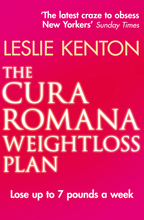
Cura Romana – Leslie Kenton’s Weight Loss Plan

Any book by Leslie Kenton is always worth looking at as her views on health are always practical and usually at the cutting edge. She has done it yet again with her Cura Romana weight loss plan which is accurate, well researched and as you would expect highly practical and the possibility of losing up to 7lbs a week doesn’t sound bad either.
The actual diet plan itself was something that she was introduced to 20 years ago when it was only available through a small number of exclusive clinics and since then she has worked to find a way to bring it to a wider public. Interestingly the research and clinical procedures behind Cura Romana were the work of the brilliant British researcher and clinician, ATW Simeons, who in the 1950’s claimed to have discovered the cause and cure for obesity.
He published papers on his findings in many medical journals including The Lancet and the basis of his argument was that obesity was nothing to do with a lack of willpower but a metabolic disorder. This research led him to identify where in the brain weight control might be located — which turned out to be the diencephalon – and his conclusion was that weight gain was the result of abnormal functioning in that area.
His revolutionary discovery, and the basis of Leslie Kenton’s diet book, was that by injecting overweight patients with minute quantities of human chorionic gondotrophin, (hCG), a glycoprotein found exclusively in the bodies of pregnant women would correct functioning of the diencephalon to bring about safe and rapid fat loss. In pregnancy hCG enables a pregnant woman’s inessential fat stores to be converted into energy to nourish the developing child. When combined with his highly specific diet program he claimed results that were able to turn unwanted fat deposits into usable energy at a rate of between 1500 and 4000 calories a day, with little or no hunger pangs being experienced.
Leslie Kenton spent many years researching Cura Romana and working with doctors worldwide who were using it, particularly in America. The drawback to offering the programme to a much wider audience was that of overcoming the difficulty of hCG injections. Then two years ago, working with a few pioneering doctors and naturopaths, she discovered a simple, easy to use at home, homoeopathic form created from the original substance and which had the same effect on promoting weight loss.
The book shares her wide-ranging experience of working with this weight loss program herself, and with the many clients she has now monitored and mentored personally through her associated website. I have been fortunate enough myself to try out the programme and it certainly does promote rapid weight loss with the dietary element being very clearly spelt out and adhering to the high protein and no carbohydrate philosophy that has been very popular over the last few years. I can’t say I always found it easy, as my natural tendency to not want to read instructions made the first couple of weeks rather tricky, but it is certainly clearly laid out and I lost over the 28 day period the weight that I had stated I want to lose.
 It is a system that has been endorsed by many happy clients, and if you want to read testimonials then you will find those on her website which was developed with her son Aaron. It offers a truly interactive program based on daily videos, audio, written materials, tools and spiritual practices led by Leslie herself.
If you want to make a start on changing the way you approach your weight as a life changing exercise, and not just a quick fix, then reading this book would be an excellent place to start.
The Cura Romana Weight Loss Plan is available from Bantam Press and for details of leslie Kenton’s exclusive mentoring program please visit the website at www.curaromana.com
The Feel Good Factor to Boost Your Mood and Motivate Yourself

If you are looking for a new approach to health and nutrition, then Patrick Holford is one of the first people to consider. His new book ‘The Feel Good Factor’ is very well timed as January is indeed when many people are flagging under the weight of the post festive season and those grey January skies. He offers you ten proven ways to get yourself into the best of moods without resorting to a doctor’s prescription.
This is a very practical book that offers commonsense advice and some highly effective methods of changing your physical and emotional health. If you want to regain your enthusiasm for life, or find out exactly what is holding you back, then this book will guide you through a series of questions and provide you with the information you need. Whether your diet needs some help, or you aren’t sure what supplements you need, he will guide you through the maze of low moods, depression and apathy. There are a number of simple questionnaires in the book that can help uncover any biochemical imbalances you may have, but be unaware of.
Simple things to do today to make your tomorrow a more welcoming and positive one are what he specializes in and you could make a start now by going online for a comprehensive free health check at www.patrickholford.com/feelgoodcheck
to find out where you rate out of a 100% score. Make sure you click on the free report button at the end, unless you want to pay for a full report. If that inspires you to make some changes you can buy the book on the site itself or from bookshops or Amazon.

How ‘Negative Eating’ Can Help You Lose Weight – Without Being Hungry
January 18, 2011 by AnnA
Filed under Food & Nutrition, Health

Sounds too good to be true, but apparently there are a number of so-called negative-calorie health foods that burn fat while making you feel full. My fear is that they are all going to be things I don’t want to eat anyway, but in the spirit of magicking away those last slices of Christmas cake, here goes.
The concept here is that certain foods actually take more energy to digest than they deliver to your body. You can eat unlimited quantities of them because although they are an important source of phytonutrients, they are not high in calories. The theory is that
your stomach senses when it is physically full, and it will trigger your brain to stop eating when you can’t handle more food so what you have to do is get your body to give you that signal clearly by eating foods that fill you up, but don’t make you fat.
The key to many of these negative calorie foods is that they are rich in water. In fact one of the oldest ‘tricks’ that we can use to fool our stomachs is simply to drink a glass of water before each meal. This way the water takes up the space you might otherwise try to cram with food so it takes less food before your stomach signals that is full.
Any food that contains a lot of water, and fibre, is ideal. So what you need to be eating are lots of apples, grapes, watermelons and a really good one is celery. All of these foods take more energy for your body to process than they actually contain in themselves, and that is how you get a ‘negative’ bonus.
Plain and simple water is the most effective appetite control substance in the world and once you start thinking in terms of water content of your food you will make a great difference to your weight. Other ‘water-filled’ items for your shopping basket are lettuce, cucumber, onions and most salad greens but don’t diminish their goodness by using a rich salad dressing as that will just add the calories back in.
On the fruit front, grapefruit is valuable as it contains naringenin, an antioxidant which triggers the liver to break down fat. Pink and red grapefruit in particular are a valuable as they get their colour from the antioxidant lycopene which is a rich source of carotenoids which are known to help to fight free radicals and believed to help (along with green tea) with prostate problems.