Why Men Are At Greater Risk of Gum Disease – And What To Do About It
November 8, 2010 by AnnA
Filed under At Home, Health, Mens Health

Though possibly not the sort of sex that immediately springs to mind, it seems that men’s sex hormones may be the biological reason why they are at greater risk than women for a particular kind of gum disease.
Researchers at the University of Maryland Dental School have found that destructive periodontitis, an infection of the gums, is more common in men than women and their gum disease tends to be worse. Periodontitis is a condition in which the gums, deeper supporting tissue, and potentially the bone surrounding teeth become infected and inflamed.
Gum disease starts with plaque, a sticky white substance that coats teeth and which is formed when bacteria in the mouth mixes with saliva and residues from starchy foods and sugar in your diet. If plaque isn’t properly removed by brushing and flossing, it accumulates and hardens underneath the gum line into tartar. Once tartar builds up, it’s much more difficult to remove than plaque and, over time, it can lead to inflamed gums, or gingivitis. This is a mild form of gum disease and one of the most common symptoms is darker red gums that bleed with brushing or flossing.
Until now it has not been certain why men are more susceptible to gum disease, but this research has revealed that it is down to the male sex steroids. These affect the immune system regulation of inflammation, which when not working well leads to the development of infection.
Another competing hypothesis in the dental world for the fact that men are known to suffer more gum disease is the environmental one. Just as men visit doctors less frequently than women, they also don’t go to the dentist as often and apparently are more likely to have worse oral hygiene and compliance with treatment and aftercare than women.
Natural Remedies for Gum Disease:
Apart from good oral hygiene, regular flossing and visits to the dentist, there are some simple things a man can do to guard against future gum disease. Natural helpers are:
1) Vitamin C
Scurvy is something we associate with 18th century sailors, and they got it because their diet was so poor in vitamin C and they had bleeding gums as a result. Today, research indicates that people with low intakes of vitamin C have higher rates of periodontal disease (ie less than 60mg a day). It also helps to prevent gum disease because vitamin C is an antioxidant which is needed to repair connective tissue and accelerate bone regeneration.
Vitamin C rich foods include grapefruit, oranges, kiwi fruit, mango, papaya, strawberry, red pepper, broccoli, brussels sprouts, and cantaloupe melon.
2) Vitamin D
Vitamin D has been found to have anti-inflammatory effects and may reduce susceptibility to gum disease. Vitamin D comes from sunlight, so sensible and limited exposure will boost your levels and if you want to take a supplement as part of a multivitamin you would be looking for at least 200 IU.
3) Stress levels
Keeping your stress levels low is healthy for everyone, but particularly here as stress increases plaque accumulation. Vitamins C and B complex are the stress vitamins to boost, so increase your intake and find something that helps you stay relaxed and cut down on stimulants such as caffeine and alcohol.
4) Coenzyme Q10
Low levels have been linked to gum disease and it is essential as coenzyme Q10 is needed to properly repair gum tissue. It is produced naturally in the body and also found in meat and fish.
5) Tea tree oil
Tea tree has so many uses I believe every medicine cabinet should have a bottle but in this particular instance tea tree toothpaste will do the job. It has proven antibiotic properties and a study on people with severe chronic gingivitis who used the toothpaste for 4-8 weeks were found to have a significant reduction in the degree of gingivitis and bleeding.
6) Change your toothbrush
A Dutch study found that the use of electric toothbrushes with oscillating, rotating heads for 3 months reduced gingivitis compared to manual brushing with a regular toothbrush. There was also some reduction in plaque, although it was not statistically significant.
Two Simple Ways To Achieve A Better Memory And Avoid Cognitive Impairment
November 3, 2010 by AnnA
Filed under Health, Healthy Ageing, Mental Health

What if I told you that keeping your mind sharp and your faculties in top notch condition could be achieved without any great effort, and you might even enjoy it? Well, I hope you would be tempted to try it and the most recent research offers great hope on how we can stay lively and alert and it works whether you are a student or retired so keep reading…
The first method is something you are no doubt already doing if you enjoy talking to others in a social setting. Of course most of us do, but a new University of Michigan study shows that talking with other people in a friendly way can make it easier to solve common problems can provide mental benefits according to psychologist Oscar Ybarra, a researcher at the U-M Institute for Social Research.
But, and there is always a but isn’t there, the emphasis is on friendly because conversations that are competitive in tone, rather than cooperative, have no cognitive benefits and indeed have negative results in terms of raising blood pressure and possibly losing said friends.
Cognitive function includes working memory, self-monitoring, and the ability to suppress external and internal distractions — all of which are essential in solving common life problems and succeeding at the bridge table. Previous research has found that social interaction provides a short-term boost to cognitive function that’s comparable in size to playing brain games, such as solving crossword puzzles.
Even having just a brief 10 minute conversation where you are getting to know another person can result in a boost to your subsequent performance on an array of common cognitive tasks. All very nice, and enjoyable, but why or how does it work?
“We believe that performance boosts come about because some social interactions induce people to try to read others’ minds and take their perspectives on things,” Ybarra said. “And we also find that when we structure even competitive interactions to have an element of taking the other person’s perspective, or trying to put yourself in the other person’s shoes, there is a boost in executive functioning as a result.”
What this highlights is the connection between social intelligence and general intelligence and so if you want to perform your best, having a friendly chat with a colleague before a big presentation or test may be a good strategy.
A second approach:
Many people are already aware that the B-Complex vitamins help us when stressed, indeed they are a popular element in stress supplements together with vitamin C, and new research now shows they may also help to slow the progress of dementia.
A two-year clinical trial in Oxford has shown that B vitamins, including B-6, B-12 and folic acid, slow down the rate of mild cognitive impairment (MCI) by half. MCI is a condition which is a major risk factor for Alzheimer’s and other forms of dementia as approximately 50 percent of people diagnosed with MCI go on to develop Alzheimer’s within five years
Scientists from Oxford University said their two-year clinical trial was the largest to date and David Smith of Oxford’s department of pharmacology, who co-led the trial, said: ”It is our hope that this simple and safe treatment will delay development of Alzheimer’s in many people who suffer from mild memory problems.”
MCI does not usually interfere with daily life, but around 50 percent of people diagnosed with it go on to develop the far more severe Alzheimer’s disease within five years. Smith and colleagues conducted a two-year trial with 168 volunteers with MCI who were given either a vitamin pill containing very high doses of folic acid, vitamin B6 and vitamin B12, or a placebo dummy pill.
These B vitamins are known to control levels of an amino acid called homocysteine in the blood, and high blood levels of homocysteine are linked to an increased risk of developing Alzheimer’s disease. Brain scans were taken at the beginning and the end of the trial to monitor the rate of brain shrinkage, or atrophy.
Dr. Gustavo C. Román, medical director of the Alzheimer & Dementia Center at the Methodist Neurological Institute in Houston, Texas, said that patients who already exhibit signs of dementia and test positive for high levels of homocysteine are more likely to respond well to the large doses of B vitamins.
CAUTION: If you want to try this for yourself, please be aware that the trial involved extremely high doses that have to be closely medically monitored so do not self dose at anything over the recommended levels without medical advice.
As a preventive, adding a high potency vitamin B complex to your daily routine can’t hurt and could be extremely helpful.
Natural Solutions For Brown Skin Spots

What do pregnant women and the over 50’s have in common? Well actually they could be one and the same thing, if they are women – but the common factor is the dark patches on the skin, like big freckles, which are known as melasma.
Both sexes do get them but they seem to be more common in women than in men and they are usually first noticeable on the backs of the hands and the face. Usually treated with drugs, chemical peels and the like, you may want to look at what else you can do to avoid and minimise them.
Melasma are thought to have a hormonal basis, probably the result of over-stimulation of pigment-producing cells by oestrogen and progesterone. This means that women taking hormones such as in HRT and the contraceptive pill are more likely to be at risk of developing melasma as are those who have had prolonged sun exposure or are of Asian descent.
Other risk factors include exposure to all types of light including UVA, fluorescent and even computer screens as they can all can prompt the onset of this type of condition. Having a poor immune system or being deficient in essential nutrients also increase the risk of developing these dark patches on the skin.
Natural solutions:
The best place to start is with prevention, and that begins with limiting sun exposure an always wearing a high factor sunblock of 30 or above. If you already have any dark patches then stay out of the sun to ensure they don’t darken further.
The good news is that if you have melasma, then on their own the hyperpigmented spots don’t pose any threat to your health. It is more an emotional and psychological issue as they are not attractive, but they do only change very gradually dependent on the amount of sunlight your skin is exposed to.
The first remedy to try is MSM (methysulphorylmethane) sulphur which can be taken to reduce the signs of melasma. It is a natural sulphur which some sufferers find helpful, but stock up before April as it could be one of the natural remedies that disappear from the shelves.
Aloe vera has long been valued for its ability to heal the skin, and organic aloe vera juice applied locally to help even out small, discolored areas is worth a try. However if your patches are much larger, then one suggestion I found online from a sufferer comes from an even older source – apple cider vinegar. Mixed with aloe juice in a ratio of 1 part vinegar to 5 parts cider vinegar (both organic please) and applied to the face regularly did the trick for a woman who had suffered for three years with pigmentation on her face.
Not a scientific trial, but a simple and natural method that might work for you too.
The Clock Is Ticking – Act Now To Keep Herbal Medicine On The Shelf
November 1, 2010 by AnnA
Filed under Health, Natural Medicine

Earlier this year I raised the issue that many of our popular alternative remedies are under increasing threat from EU legislation and we are now up against the clock if we want to try and stop it from happening. Herbal medicine has an old and respected tradition, indeed without it many of our modern drugs would not exist.
Modern science has sought out and taken the active ingredients from medicinal plants and synthesised them, with the heart drug digitalis from the foxglove being a common example, as is aspirin from white willow bark. Now your right to use the original, natural plant based remedies could be at an end.
With strict European legislation due to come into force next April, some age-old herbal remedies on sale in health food stores today could become, quite literally, a thing of the past. From April 2011, all member states will have to comply with a European Union directive which specifies that all herbs produced, manufactured and sold in the EU must be classified as either foods or medicines.
Those working in the sector have for a long time been campaigning for regulation and greater control, but the new authorization and licensing requirements have enormous implications for the herbal medicine industry throughout the European Union and for your freedom of choice.
Marinella Trovato, President of S.I.S.T.E., the Italian Society for Herbal Science and Technology in Milan, said that many small producers and manufacturers of medicinal herbs will no longer be able to afford to stay in business as they will be unable to cover the cost of authorization licences for medicinal herbs. UK-trained herbalist, Marco Valussi, speaking at the conference, warned that the terms of the directive would put herbal remedy manufacture in the hands of large pharmaceutical companies, and this was likely to narrow the range of medicinal herbs on the market.
Now that major companies like Boots have their own range of herbal medicines is this not a good thing? Yes, but what you see with large companies is that they are interested in a small rage of remedies that are the most popular, and profitable. However the range of herbal medicines available at the moment is huge and covers all aspects of health care.
What putting herbal medicine into the hands of the large companies means is that they are more likely to focus on maybe five or ten important herbs and leave behind the other ones that are just as valuable, but as popular.
If you value your freedom of choice it is almost too late to register a protest – but not quite. I don’t want to spend a winter without Echinacea to boost my immune system, so if you have benefited from herbal medicine then please take a moment and register your protest with your MP.
A very simple way to do this is to go online where you will be taken through a simple form that will be sent online directly to the MP for your area so copy and paste this link into your browser and make a healthy difference:
http://www.pranapositive.com/shm/index.php?option=com_breezingforms&Itemid=36
Acupressure for your – and your pet’s – health

When most people think about acupressure they tend to think only about the benefits it can have for people. However, acupressure can also provide great benefits for dogs and other pets, particularly as they become elderly. Dogs, for example, love to be touched, petted and massaged, and they respond very well to this type of therapy. Used alone or in conjunction with alternative remedies, acupressure may result in significant improvement in your pet’s health.
Acupressure is acupuncture without the needles and many people find it very beneficial. Based on the same principles of acupuncture, it is the application of pressure on certain energy points of the body. In a gentle and non-invasive way, this pressure balances and releases the flow of blocked energy, enhancing health and mental stability.
Acupressure helps to improve the quality of life in elderly dogs suffering from hip dysplasia, arthritis, as well as every day aches and pains. At the same time, it can calm a new puppy and help ease the transition period when the puppy is brought into a new home.
Although acupressure is most commonly used to relieve pain and discomfort, it has many more benefits including strengthening the immune system, strengthening, muscles, tendons, joints, and bones, alleviates inflammation and swelling and releasing endorphins which calm and relieve pain as well as helping with behavioural issues.
Once you hve learned the necessary points, which you can do by first having a session with an therapist so they can show you where they are. Applying acupressure to your pet is actually a very simple technique. The most important thing to remember is that there must be a loving, calming, and trusting atmosphere. Acupressure is not a difficult process. It can be applied in the position that your pet likes best: standing, sitting, or lying down.
You can of course do this yourself, but you need to know where those points are so I would suggest an initial consultation with an accupressure therapist and say why you want the session to make sure they do work with animals or there is a website that will give you an idea of what you need to be looking for which I think is equally applicable to other household pets. You will see a tab at the top of the page to click on at at www.luckydoghealth.com.
Always begin a session by slowly petting and massaging your pet and then when they are in a relaxed state, you can move to the pressure points that you need to focus on. Once you have located the point, apply steady gentle pressure with your thumb or index finger. As you do this, visualize an even flow of energy going through that point into the body. The purpose of this visualization technique is to help you focus and not make any sudden movements that may distract the pet.
With a steady and gentle hand, increase the pressure and release it after five to fifteen seconds, always paying close attention to your pet’s body language. If they feel uncomfortable, release the pressure. However, please note that the maximum amount of time to hold the pressure is fifteen seconds. If you come across a tender spot, simply massage the tender area and as the pet relaxes, then slowly apply pressure to that point.
I have personal experience of using it when one of my cats had what seemed to be a stroke in the middle of the night. I did what we most naturally do for an animal in distress, I held and stroked and soothed and used my hands to relieve her discomfort by using the pressure points I knew. The following day she was lethargic but alert and has continued to improve, of course I checked with the vet as well but it seemed that simple contact and pressure did have a beneficial effect. The key is to make these sessions an enjoyable activity and many pets look forward to this activity while experiencing improvement in health
Low Testosterone Linked to Alzheimer’s and Early Death
October 26, 2010 by AnnA
Filed under Health, Healthy Ageing, Mens Health

Hormone balance is not confined to women but somehow men don’t get the same level of attention. This may be because they do not pay as much attention to their own health, or visit the doctor as often, so this is aimed as much at the women in their life as it is at them. This is an alert to prompt men to get their testosterone levels checked because of the new links between that and Alzheimer’s and even premature death.
Alzheimer’s
This new research on Alzheimer’s comes from a team that was led by Leung-Wing Chu, M.D., Chief of the Division of Geriatric Medicine at Queen Mary Hospital at the University of Hong Kong. The researchers studied 153 Chinese men who were at least 55 years and older, lived in the community and didn’t have dementia. Of those men, 47 had mild cognitive impairment — or problems with clear thinking and memory loss.
Within a year, 10 men who all were part of the cognitively impaired group developed probable Alzheimer’s disease. They also had low testosterone; elevated levels of the ApoE 4 (apolipoprotein E) protein, which is correlated with a higher risk of Alzheimer’s disease; and high blood pressure. Going a step further, the research indicates that having good levels of testosterone may also have a protective value against the disease.
Low Testosterone Linked to Greater Risk of Early Death
A report in the BMJ-British Medical Journal this month also reported that low testosterone levels seem to be linked to a heightened risk of premature death from heart disease and all causes.
This research is based on 930 men, all of whom had coronary artery heart disease, and had been referred to a specialist heart centre between 2000 and 2002. Their heart health was then tracked for around 7 years.
On referral, low testosterone was relatively common. One in four of the men was classified as having low testosterone, as opposed to a tailing off in levels of the hormone as a result of ageing. During the monitoring period almost twice as many men with low testosterone died as did those with normal levels.
The only factors that influenced this risk were heart failure, treatment with aspirin or a high blood pressure drug and low bio-T levels. A low bio-T level was an independent risk factor for premature death from all causes and from heart disease, after taking account of other influential factors, such as age, other underlying health problems, smoking and weight.
It is not just low levels that are a problem either, as borderline levels of low total testosterone also increased the risk of an early death. Low levels are associated with obesity, risky blood fats, and insulin resistance, all of which are themselves risk factors for diabetes and heart disease.
Time for a visit to the doctor?
Coconuts – the source of the new low GI sweetener and more
October 25, 2010 by AnnA
Filed under featured, Food & Nutrition, Health

As an all round health food coconuts are hard to beat – you try knocking them off their perch at the fair! We use their milk, oil and flesh in cooking and the milk straight from the shell is a refreshing health drink. A rich source of fibre, vitamins, and minerals it is classified as a “functional food” because it provides many health benefits beyond its nutritional content.
Now coconut sugar is emerging as an environmental and nutritional champion of low glycaemic sweeteners. This is promising news for those concerned with health issues such as diabetes, obesity, heart disease, cancer, and gallstones.
Low glycaemic foods are important to overall health since they do not create rapid spikes in blood glucose levels. Increased blood glucose triggers the pancreas to increase insulin and when this becomes excessive then you have the groundwork for diabetes, hypoglycaemia, and insulin resistance.
The benefit of low gycaemic foods is that they keep blood glucose levels more even, whereas when a high glycemic food is consumed, excess insulin is secreted and blood glucose levels drop lower over the next few hours. This is one of the reasons that eating high glycaemic foods contributes to weight gain and obesity as you get hungrier faster than someone which encourages over eating and snacking.
High glycaemic intake has also been linked with increased serum levels of C-reactive protein, a marker for inflammation that is an accurate predictor of heart disease as well as increased risk for breast cancer, colorectal cancer and gallbladder disease.
Coconut sugar is high in potassium, magnesium, iron, boron, zinc, sulphur, and copper and it also plays an important part in natural healing and has been used to treat a wide variety of health problems including abscesses, asthma, , bronchitis, bruises, burns, colds, constipation, cough, , dysentery, earache, fever, flu, gingivitis, kidney stones, nausea, rash, skin infections, sore throat, tuberculosis, ulcers, upset stomach, weakness, and wounds.
Nor is its use confined to traditional healing, modern medical science is never slow to latch on to a good thing and they now there are now published studies in medical journals showing the benefits of coconuts for a wide range of conditions. These include killing the viruses that cause influenza, herpes, measles, hepatitis C, SARS, AIDS, and other illnesses and the bacteria that cause ulcers, throat infections, urinary tract infections, gum disease and cavities, pneumonia, and other diseases as well as killing the fungi and yeasts that cause candidiasis, ringworm, athlete’s foot, thrush, diaper rash, and other infections.
I hope that shows you the health value of the humble coconut, and for anyone still using artificial sweeteners – really, haven’t you been reading my articles at all – then this might be the time – please – to give up them up for the natural, nutritious sweetener that coconut sugar provides.
Dark Chocolate Is Good For Diabetics – Oh Really?
October 20, 2010 by AnnA
Filed under Food & Nutrition, Health, Strange But True

You may have seen a similar headline that in your daily newspaper this week (without the boom really of course) and it relates to results from a study by a group of researchers from the University of Hull and the Hull York Medical School.
I never thought I would be the one to try and dissuade anyone from eating chocolate, but there are some serious drawbacks to my mind with this research.
The study reports that dark chocolate has significant health benefits for people with Type 2 diabetes as HDL (high density lipoprotein) or ‘good’ cholesterol is improved and overall cholesterol balance is enhanced when patients consume 45g of dark chocolate each day over 16 weeks.
The patients were given 85% cocoa solids or a placebo which contained no cocoa solids but was dyed the same colour as the dark chocolate. No mention is made of how the poor group, placebo fared, rather than having to consume something that sounds quite unpleasant.
Steve Atkin, Professor of Diabetes and Endocrinology, who led the study says: “People with Type 2 diabetes are twice as likely to develop cardiovascular disease and since one of the main contributory factors to heart disease is a low level of HDL or ‘good’ cholesterol, the findings that dark chocolate can improve this, means the results of this study are hugely significant.”
Hmm, I agree with the first part of the sentence but not at all convinced about his conclusion. He goes on to say “Chocolate with a high cocoa content should be included in the diet of individuals with Type 2 diabetes as part of a sensible, balanced approach to diet and lifestyle. This study demonstrates that it can offer a potential reduction in cardiovascular risk without detrimental risks on weight, insulin resistance or glycaemic control.”
I do wonder about doctors I do really — however as he is a professor perhaps he is slightly different — but firstly there is rarely such a thing as a sensible approach chocolate intake for many people and secondly I do not see how a chocolate bar does not have a detrimental risk for weight or glycaemic control.
I’m certainly no expert, but Dr. Iain Frame, Director of Research at leading health charity Diabetes UK, is and takes the same view and he should know what he’s talking about. This was his response to that piece of research:
“On no account should people take away the message from this study, conducted in only 12 people, that eating even a small amount of dark chocolate is going to help reduce their cholesterol levels. The tiny health benefit of this compound found in cocoa-rich chocolate would be hugely outweighed by the fat and sugar content. The design of the study is also somewhat unrealistic as they asked participants to eat only around half the size of a normal, dark chocolate bar every day for eight weeks.
That is something that I can agree with, but the really critical element for me in this research is that yet again it is being paraded as a result on an incredibly tiny sample. 12 people might make up a jury but they do not weigh very heavily for me against the 3 million diabetics estimated in the UK.
This research is on far too small scale to draw such a huge and potentially damaging conclusion from and although there certainly might be some benefit in investigating further. I will let Dr. Iain Frame, of Diabetes UK, have the last word. “It would, however, be interesting to see if further research could find a way of testing whether polyphenols could be added to foods which weren’t high in sugar and saturated fat such as chocolate.”
Until then by all means each chocolate if you are diabetic, but very little and not very often would be my advice and if you would like further information on diabetes please visit www.diabetesuk.org
No Time For Breakfast – Power Up!
October 19, 2010 by AnnA
Filed under featured, Food & Nutrition, Health

It is probably tedious by now for my regular readers to hear yet again of my quest for the perfect breakfast, both nutritionally and in time and effort. However I now have found a pretty good combo that I think could work through my combination of two new healthy products. One of them amazingly has been developed by professional wrestler — that’s not something you see in the health world everyday.
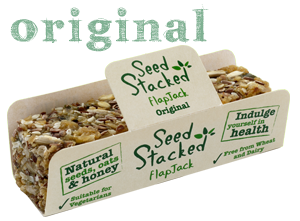
Seed Stacked are one of those advertising miracles where the name tells you exactly what it is — a flapjack bar full of seeds. Chris Thompson had no plans to develop a healthy, natural snack bar when he was travelling the world as a professional wrestler but a shock diagnosis of Crohn’s Disease, changed all that. That led him to discover the power of seeds as his research showed him how many nutrients were packed into seeds, and the fact that they are truly superfoods.
He started to develop the Seed Stacked flapjack and entered a ‘Dragons Den’ style competition with Peter Jones on the panel and won! Chris sourced a factory and the 100% natural bars went into production with three varieties including yoghurt and carob topped.
Naturally he is delighted with the success of his idea, but probably even more grateful that he is Crohn’s Disease is in remission and he is happy, healthy and back in training for the wrestling ring.
We know seeds are essential for our health and generally speaking we do not eat enough of them. Anyone can benefit from them but they will be of particular interest to women going through menopause as the particular combination of Pumpkin, Sunflower, Sesame and Linseeds, oats and honey provide naturally occurring plant estrogens (phytoestrogens). These can help to balance hormones and the sunflower seeds in particular are high in vitamin E which has shown to help reduce the dreaded hot flushes.
And To Wash It Down?
If there is a drawback to the seed bars, and they are certainly delicious, it is that you do need something to wash them down with. Breakfast drinks are usually coffee or tea but a much healthier option would be a glass of tart cherry juice.
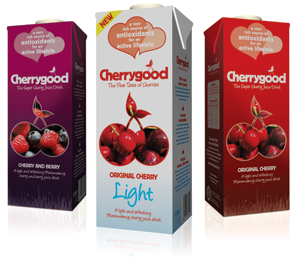
Cherrygood juice contains US grown Montmorency cherries which have the highest antioxidant level of any fruit with a whopping 17 different antioxidant compounds in them. It’s also giving you the equivalent health benefits of around 20 portions of fruit and vegetables in a carton. Think of all that peeling and chopping you could save!
Don’t be deluded by the fact it is called tart cherry juice; it is certainly not sweet, but nor is it sharp but actually has a very nice refreshing taste. It’s certainly packs in the benefits as a glass contains more antioxidants than five portions of banana, tomatoes, watermelon, peas and carrots. Antioxidants are vital to helping the body to fight free radicals and cherries contain 19 times more beta-carotene than blueberries or strawberries along with Vitamin C, potassium, magnesium, iron and folate.
If you do have trouble sleeping, then you might want to take your glass of the juice at night as tart cherries are one of the very few known food sources of melatonin, which is crucial to the maintenance of regular sleep patterns.
So if, like me, you are looking for a healthy and fast way to start the day then this is a good combination to try out. If you have any difficulty locating them in your supermarket or health store then go to their respective websites at www.seedstacked.com and www.cherrygood.com
Botox – More Than Just A Pretty Face?

One of the things about progress in medicine is the sheer adaptability of a treatment or drug when faced with adverse publicity. Botox has certainly had plenty of the latter, and now I read that FDA approved it for March as treatment for flexor muscle spasm of the elbow, wrist, and fingers in adult patients and now expanded that to include the prevention of migraine headaches in adults.
According to Russell Katz, MD, director of the neurology products division in the FDA’s Center for Drug Evaluation and Research, “Chronic migraine is one of the most disabling forms of headache. Patients with chronic migraine experience a headache more than 14 days of the month. This condition can greatly affect family, work, and social life, so it is important to have a variety of effective treatment options available.”
Well yes, that is certainly true and Botox prescribed for migraines is given approximately every 12 weeks as multiple injections around the head and neck to try to dull future headache symptoms. Personally I wonder how it helps as this is a treatment that actually paralyses the muscles of the forehead we must have an effect on blood flow and I would have thought on migraines that happily I am not a doctor and am therefore allowed to speculate just how beneficial this might be.
In case you were wondering if you could get your wrinkles treated and your headaches at the same time please note that the FDA say that it “has not been shown to work for the treatment of migraine headaches that occur 14 days or less per month, or for other forms of headache.”
This research is based yet again on a tiny sample. It took place in February with just 18 participants who were patients with imploding and ocular headaches who were having Botox to treat their wrinkles and they did see a reduction in their migraines as well. Though again I have to wonder whether they had fewer migraines because they were smiling a lot more at their new and improved appearance, and in any event once you have Botox you are unable to frown and we know that smiling more often elevate your mood and perhaps give you less to have a headache about?
Interestingly the most common adverse reactions reported by patients being treated for chronic migraine were neck pain and headache — really?
Anyone considering Botox — whether for cosmetic or medical reasons — needs to be aware that if the botulinum toxin spreads to other areas of the body than the reactions can include swallowing and breathing difficulties and these can be life-threatening.
What is more interesting fact for me is that Allergan (who make Botox) also have been making headlines over marketing issues related to it. The company announced last month that it would pay $375 million in fines after pleading guilty to a charge of misbranding related to off-label use of botulinum toxin and a further $225 million to settle civil claims brought by the Department of Justice.
The misbranding charge alleged that, during the period from 2000 to 2005, labelling for the drug did not contain complete directions for intended use, which included off-label uses for headache, pain, spasticity, and juvenile cerebral palsy — none of which they are currently recommending it for I believe.
Oh, and in case you wanted to know about their most recent developments I’m sure you will be pleased to hear that Allergan is now conducting phase III trials using Botox with patients who have neurogenic and idiopathic overactive bladder. I really don’t want to think about what the effect of a muscle freezing agent is going to do in those cases.