Bump & Grind – A Survival Guide for Those Trying To Get Pregnant
May 11, 2011 by AnnA
Filed under Health, Womens Health

You may wonder why my headline refers to “those trying to get pregnant” instead of just saying women but what is often forgotten is that the whole process involves two people and the other half is under just as much stress and strain as the potential mother. One of the quotes from a satisfied reader, Danielle, tells how her husband could not put the book down and admitted that he laughed a lot but that was only because he found it was so true.
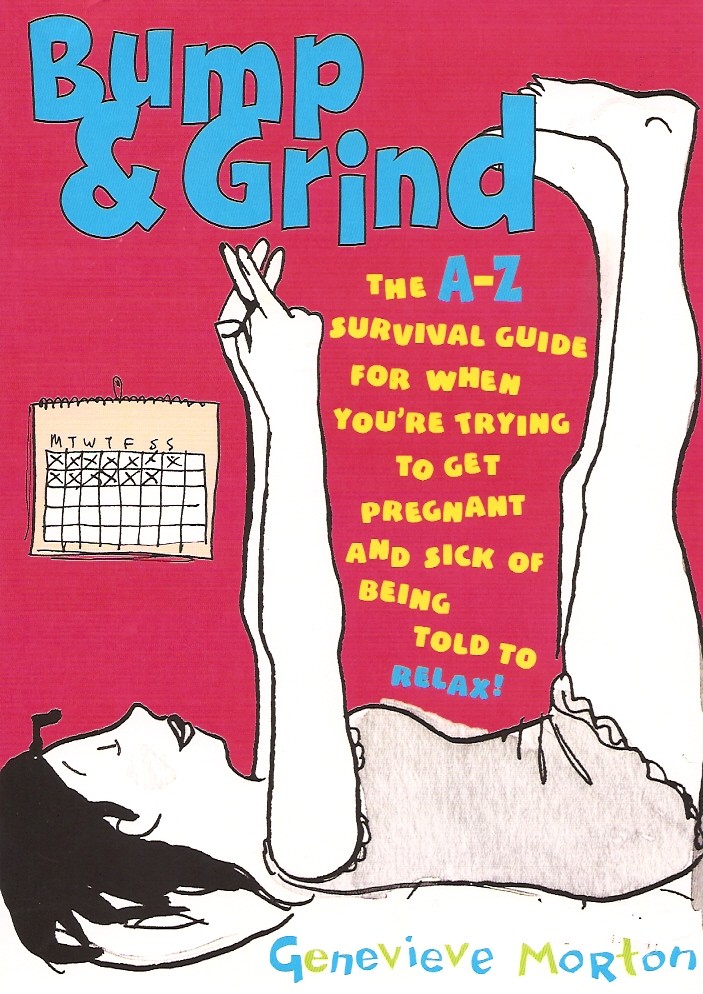
After 18 months of trying to get pregnant without success, New Zealand lifestyle reporter and columnist Genevieve Morton was told over and over to ‘just relax!’ But she couldn’t and not being a woman who lives up easily she scoured fertility books hoping one would make her feel better about herself. Unfortunately, Instead they made her feel worse but fortunately for other pregnant women like her she decided to write her own book .
Bump & Grind is an honest and amusing A-Z survival guide for every woman trying to conceive and wondering if her sex life will ever be the same again. One of my favourite sections of the book is the “Everyone says” chapter where every cliche you’ve ever heard is trotted out from getting a puppy to just relaxing and having watched a friend going through the agony of trying to conceive for many years I have always been impressed she didn’t just hit people over the head when they trotted one of these perennials out.
The book is very simple in style, easy to read and filled with valuable advice on how to avoid nagging your partner to death (sound and wonderfully funny) and all the other vital topics such as what fertility-friendly foods to eat, how to cope with disappointments, when to dodge annoying questions from well-intentioned relatives and, of course, most important of all how to get pregnant.
There are plenty of quotes from women who have gone through or are in this process so there is a sense of community and that no woman has to be alone with it.
This is a fun and honest guide to coping with everyday life while trying to conceive and will help any woman coping with unexplained infertility and wondering if her sex life will ever be the same. Published by White Ladder Press you will find Bump & Grind on Amazon.
5 Simple Ingredients That Boost Your Energy Levels and Your pH
May 10, 2011 by AnnA
Filed under featured, Food & Nutrition, Health, Natural Medicine

The human internal ecosystem is stabilized by several different buffering systems that keep the body functioning at a high level for as long as possible. One of these buffering systems is pH and our blood stream should be slightly alkaline at 7.365 pH at all times for the body to be healthy.
The body maintains good pH levels through getting rid of excess acid through the lungs, skin, saliva and urine. The most common problem with pH balancing is keeping up with the excess metabolic acids. These are produced from a lack of oxygen, poor diet, environmental toxins, cellular inflammation and metabolic waste products.
Maintaining good pH levels is vital for good health and one of the biggest challenges is maintaining that all day and night. We are constantly encountering different stressors that drain our alkaline reserves and leave us in an acidic state but there are a few simple dietary measures that can help and you will gain energy, mental clarity, and emotional stability.
1 Celery: it is full of water and makes an excellent acid neutralizer. You can eat it at any time, as a snack or with a meal. It contains a perfect electrolyte balance that quenches thirst and reenergizes and alkalizes your body.
2 Aloe Vera Juice: loaded with electrolytes and highly alkalizing it is loaded with trace minerals, anti-oxidants, and polysaccharides. Pure aloe juice or gel gives one of the quickest alkaline boosts and the perfect way to drink it is before or after a large meal. Apple cider vinegar is another great alkaline booster that can be used either with aloe vera or on its own.
3 Fennel Seeds: contain a concentrated form of minerals like calcium, potassium, manganese, magnesium, selenium, zinc, copper, and iron and Is rich in powerful anti-oxidants. Fennel seeds neutralize acids, aid in digestion, and are a good breath freshener. If you don’t want to chew on the seeds, then fennel tea makes a good substitute and is an ideal drink after a meal to a digestion.
4 Lemon Bicarbonate Formula: maintaining the ideal alkaline environment during the night can pose a problem, but this drink will help if taken just before going to bed. To make it squeeze a whole lemon in a glass and begin adding baking soda bit by bit. The acid/base combination will immediately begin to fizz but just keep adding baking soda until the fizz stops and then fill the glass with water (8-16 oz).
5 I promised you a refreshing lemonade drink and as well as containing some of the most powerful anti-oxidant rich herbs and alkalizing elements it can also be used by people who crave soft drinks and other sweetened drinks and are looking to retrain their palate .
Best made fresh in a large glass jug and kept in the fridge: ingredients are 4 -6 lemons,1 tsp each of ground turmeric and cinnamon, pinch of pink Himalayan salt, 1/2 tsp of liquid stevia (or to taste) and 1 tsp ground/fresh ginger (optional). Combine all the ingredients in the jug and top up with water to your personal taste.
Increased Risk of Breast Cancer Recurrence With Common Drugs
May 9, 2011 by AnnA
Filed under Medical Research & Studies, Womens Health

High blood pressure is increasingly common with more and more people on lifelong medication to control it. However, we need to remember that the human body doesn’t exist in separate, unconnected parts and that if you take a drug directed at one particular organ or problem, it doesn’t mean that medication will only zero in on one symptom or function.
It can, and often will, impact other processes, cells and organs or even the immune system and a disturbing example of this is the connection that has just been made between widely prescribed drugs commonly used to control high blood pressure and heart failure in women and breast cancer.
According to a new study by researchers at UCLA’s Jonsson Comprehensive Cancer Center, ACE inhibitors and beta blockers (the most frequently prescribed drugs for high blood pressure and heart problems) appear to be linked with an increased risk of recurrence in women who have had breast cancer. Dr. Patricia Ganz, author of the study, used data from the Life After Cancer Epidemiology (LACE) study, which included patients diagnosed with early stage breast cancer, as the basis for the research. Her findings have led her to conclude that a much larger clinical database study is needed as she was both concerned and surprised at the negative effect of the ACE inhibitors on chances for breast cancer recurrence.
For me this confirms the belief that medicine needs to be dealing with the whole picture and not just looking at isolated conditions or symptoms. Many women will certainly need to be taking medication for high blood pressure if they have not managed to control it by other more natural means like diet and exercise but drugs never act in isolation.
Many years ago I was involved with the writing of a book called The Medicine Chest which looked at the interaction between prescription drugs, food and supplements and it was quite startling to me to realise the impact that so many drugs have well outside their original sphere of influence.
No woman who has experienced breast cancer ever wants to repeat the experience and therefore this research is a timely reminder that by taking care of your own health and asking questions about every medication you are prescribed you will improve your own chances for well-being and longevity.
A good doctor will always answer your questions about what contra indications come with the drug and if they do not — and you cannot change your doctor — then I’ve always found pharmacists to be extremely helpful and the Internet is always a backup research tool.
If you have had breast cancer and are taking medication for either heart problems or high blood pressure then please discuss this with your doctor, particularly if you are under any degree of stress. A study carried out in September 2010 concluded that chronic stress works as a “fertilizer” to feed breast cancer progression through inflammatory signaling, significantly spiking the spread of disease.
We know that inflammation appears to play an important role in breast cancer and different classes of drugs may influence different pathways of inflammation is so as well as adopting a healthier lifestyle dealing with stress is also a high priority.
Adding Energy In A Sachet
May 4, 2011 by admin
Filed under featured, Health, Vitamins & Supplements

We all have periods where our energy is lower than we would like it to be and we usually have our favourite “fixes” to help us through it. That normally involves some kind of stimulant like coffee, chocolate, alcohol or — less common these days — tobacco. If you are looking for a more natural lift then certain herbs are traditionally used, particularly ginseng and ginkgo, and if you want to have a compound that will help lift your energy and mood and give you a good balance of vitamins then there is a food supplement that might be the answer for you.
As a hangover from a childhood addiction to “pop” usually a lurid orange colour with the inaccurate name of Jusoda, as I don’t think the juice of an orange had ever ventured near it, I liked the fizz and the refreshing taste of this new supplement. The grown-up, and all natural version, is of course not a soft drink but Turbovite Whiz-Fizz is both fizzy and orange but comes in sachets rather than bottles and you just add water.
If caffeine is your stimulant of choice, then Turbovite will give you that same boost up with less than you would find in a cup of coffee and this new pick me up relies more on the herbs and minerals it contains. Among these are Ginseng to help give you a longer term energy and stamina boost, and Ginkgo Biloba, for greater mental alertness and concentration. It’s pleasant taste comes from fruit sugar which adds vital fuel for body and mind, whilst calcium and magnesium provide your muscles with the nutrients they need to work at their best.
If you need to tackle either a physical effort or a mental one then the range of B Vitamins it contains not only aid with energy metabolism, but also give your immune system a boost. Last, but certainly not least, there is Vitamin C also to help with energy metabolism and of course it is absolutely essential to help in protecting your cells against stress.
Available from a number of independent chemists and for further details please visit www.verdurehealthcare.com
Concern Over Pesticide Exposure During Pregnancy Linked to Lower IQ in Children
May 3, 2011 by admin
Filed under Childrens Health, Health, Medical Research & Studies

Exposure to pesticides is known to carry health risks in both adults and children, but a new study at the University of California, Berkeley’s School of Public Health, has found a clear link between intelligence rates and prenatal exposure to organophosphate pesticides.
Organophosphates (OP) are a class of pesticides that are widely used on food crops and are well documented neurotoxicants. Indoor use of chlorpyrifos and diazinon, two common OP pesticides, has been phased out over the past decade, primarily because of health risks to children. However, this is the first time that exposure to their use has been linked to lower intelligence scores in children when they reach the age of 7.
The researchers found that every tenfold increase in measures of organophosphates detected during a mother’s pregnancy corresponded to a 5.5 point drop in overall IQ scores in the 7-year-olds. Children in the study with the highest levels of prenatal pesticide exposure scored seven points lower on a standardized measure of intelligence compared with children who had the lowest levels of exposure.
What this means in practice is that those children who have been exposed are also potentially being handicapped by having below average IQ rates and may possibly need more specialised education and support at school.
This is not an isolated study but part of a trio on pesticide exposure and childhood IQ that was published online April 21 in the journal Environmental Health Perspectives. The other two studies — one at Mt. Sinai Medical Center, the other at Columbia University — examined urban populations in New York City, while the UC Berkeley study focused on children living in Salinas, an agricultural center in Monterey County, California. The researchers sampled pesticide metabolites in maternal urine and umbilical cord blood levels of a specific pesticide, chlorpyrifos. A previous study also found an association between prenatal pesticide exposure and attention problems in children at age 5.
What is unusual is that these figures appear not just in urban areas but are consistent across all the population, which means that these pesticides have entered the food chain and are being consumed by everyone.
However, the really significant finding is that while markers of prenatal OP pesticide exposure were significantly correlated with childhood IQ, exposure to pesticides after birth was not. This suggests that exposure during fetal brain development was more critical than childhood exposure.
The most at risk occupations are exposure are farm workers, gardeners, florists, pesticide applicators and anyone working at a manufacturer of such products.
A simple precaution that pregnant women could take would be to switch to as organic diet as possible, particularly for grains, vegetables and meat products. At home, or in the garden, then use natural nonchemical insecticides and pesticides.
Rescue Me! Natural Oils to Reduce Stretch Marks, Scarring and Dry Skin

Many women know the benefits of rich oils to help ease stretch marks, and with over 75% of women being left with such marks is good to know about something that is really effective. The sooner in the pregnancy it is used the better, but Rescue Oil from Healthpoint will help at any point with both stretch marks and scarring and is also an excellent and very economical skin restorer.
Rescue Oil is a favourite with many celebrities who can certainly afford much more expensive products, although whether they use it for treating blemishes, scarring, stretch marks, open pores, dry or dehydrated skin and to lessen the signs of ageing is anybody’s guess. I would suspect though it is more likely to be the latter!
It contains a specialist blend of natural oils: vitamin E, evening primrose oil, almond oil and peach kernel oil and is easily absorbed into the skin. It can also be used in the bath and is a particularly effective treatment to nourish nails and cuticles.
It is used by both men and women for general skincare conditioning, which may surprise you because although the men’s skincare market has expanded hugely in the last few years this particular product has found favour with men who do a lot of working out. It’s not particularly well known that men get stretch marks too, particularly if they have a body-building routine.
The television programme Loose Women are now including it in the goodie bag they give to guests so if Jackie Collins, Michael Ball and Michael Flatley look younger the next time you see them you will know why.
As we have been having some wonderful sunny days recently, I have been trying it on my face and it is excellent to prevent the skin drying and to reduce lines and wrinkles. Similar oils cost more than double and I will certainly be packing a bottle with me for my next holiday! There are three sizes, including a small travel size, and ranges in price from £0.99 to £2.49. My local Morrisons supermarkets stocks it as do many independent pharmacies or online at Amazon.
If you want to know more then they have a specific website at www.rescueoil.co.uk
St John’s Wort Could Have Benefit in Treatment of Recurrent Brain Tumours
April 27, 2011 by AnnA
Filed under Health, Medical Research & Studies, Natural Medicine

Science is always fond of taking natural substances active ingredients and synthesizing them such as foxgloves into digitalis and white willow into aspirin. Now it is the turn of St. John’s wort which is more commonly known for its ability to treat depression because it contains hypericin, a compound naturally found in the plant.
Researchers have found that a synthetic version may be a promising treatment for patients with recurrent malignant brain tumors and they published their results online on March 31, 2011 in the journal Cancer.
Malignant gliomas, tumors that arise in the brain or spine, are largely incurable cancers with a poor prognosis and an average one-year survival. Gliomas are typically treated with a combination of surgery, radiation therapy, and chemotherapy. Now, laboratory studies have shown that synthetic hypericin strongly inhibits the growth of gliomas, due in part to its inhibitory effect on protein kinase C, a family of enzymes that promotes tumor proliferation.
The study was done at the University of Utah School of Medicine, and I suppose I am curious as to why they used a synethesised version as opposed to the real thing. We know from aspirin use that isolating the individual component that deals with pain relief and synthesizing it means you do not get the full synergistic effect of the whole plant. In the case of aspirin you don’t get the protection of the other parts of white willow that buffer the active ingredient and protect against stomach problems – something that regularly occurs with aspirin use.
In this study, the researchers gave the patients gradually increasing dosages of synthetic hypericin and monitored them for adverse effects. Forty percent of the study participants were able to complete a three-month treatment regimen, demonstrating that hypericin is well-tolerated as an oral medication in this patient group. They found that 22 percent of all study participants achieved either stable disease or a partial response during treatment with hypericin. Of the 18 patients who completed at least 60 days of hypericin treatment, 50 percent achieved either stable disease or a partial response.
The patients enrolled in the study were all individuals whose tumors had recurred or progressed after extensive prior therapy and I wonder if they had been given whole St John’s Wort if those improvement figures would have increased. Of course you cannot patent a natural substance and so it is of little interest to pharmaceutical companies as there is not the same profit level to be made and that is only one of the reasons that natural substances are extracted and synthesized.
Testosterone Replacement Could Decrease Deaths in Men With Type 2 Diabetes
April 26, 2011 by AnnA
Filed under Health, Healthy Ageing, Mens Health

A new study reported at the Society for Endocrinology by Professor Hugh Jones shows that men with low levels of testosterone may die sooner unless they are given testosterone replacement therapy.
Professor Jones’ team conducted a six year study of 587 men with type 2 diabetes, splitting them into three groups: those with normal and low testosterone levels and those with low testosterone levels treated with testosterone replacement therapy for two years or more during the follow up period.
The findings show for the first time that low testosterone puts diabetic men at a significantly increased risk of death. 36 of the 182 diabetic men with untreated low testosterone died during the six year study, compared to 31 of the 338 men with normal testosterone levels (20% vs 9%). Furthermore, only 5 of the 58 diabetic men that were given testosterone replacement therapy died during the study (8.6%), meaning they showed significantly better survival compared to the non-treated group.
It is well known that men with type 2 diabetes often have low testosterone levels, so it is important that we investigate the health implications of this. We now need to carry out a larger clinical trial to confirm these preliminary findings. If confirmed, then many deaths could be prevented every year.
This is the first study to show testosterone treatment can improve survival in men with type 2 diabetes and testosterone deficiency. Further studies now need to be carried out to fully investigate the potential therapeutic benefit of testosterone replacement in diabetic men with low testosterone but such men might well consider looking at natural testosterone supplements in consultation with their doctor.
Breakthrough Gel for Arthritis Treatment
April 25, 2011 by AnnA
Filed under Healthy Ageing, Medical Research & Studies

Arthritis is a crippling disease that affects millions of people worldwide. Some suffer only mild symptoms but at its worst it is truly debilitating and extremely painful with treatment bringing patchy relief for many. Both rheumatoid arthritis and osteoarthritis are characterized by often debilitating pain in the joints and a new method of relief could be at hand.
Researchers at Brigham and Women’s Hospital in the USA) report on an injectable gel that could spell the future for treating these diseases and others. Among its advantages, the gel could allow the targeted release of medicine at an affected joint, and could dispense that medicine on demand in response to enzymes associated with arthritic flare-ups. Arthritis is a good example of a disease that attacks specific parts of the body. Conventional treatments for it, however, largely involve drugs taken orally. Not only do these take a while (often weeks) to exert their effects, they can have additional side effects. That is because the drug is dispersed throughout the body, not just at the affected joint. Further, high concentrations of the drug are necessary to deliver enough to the affected joint, which runs the risk of toxicity
Nor could this new development be limited solely to arthritis but researchers believe could be useful for multiple medical applications including the localized treatment of cancer, ocular disease, and cardiovascular disease.
Jeffrey Karp, leader of the research and co-director of the Center for Regenerative Therapeutics, recently won the coveted SFB Young Investigator Award for this work. It is currently of course possible to inject a drug into the target area, but it won’t last long–only minutes to hours–because it is removed by the body’s highly efficient lymphatic system. There are also available implantable drug-delivery devices but these have drawbacks: most are made of stiff materials that in a joint can rub and cause inflammation on their own and they generally release medicine continuously–even when it’s not needed. Arthritis, for example, occurs in cycles characterized by flare-ups then remission.
A series of experiments confirmed that the gel can release encapsulated agents in an on-demand manner and although the team has yet to test this in humans, they did find that in mice the gelremained stable for at least two months. Further, the gel withstood wear and tear representative of conditions in a moving joint.
Additional tests in mice are underway and a patent has been applied for so they can start research on human subjects.
The Importance of COQ10 in Improving Hypertension and Preventing Heart Failure
April 20, 2011 by AnnA
Filed under Health, Healthy Ageing, Medical Research & Studies

Coenzyme Q10 (CoQ10) is a compound found naturally in the energy-producing centre of the cell known as the mitochondria. CoQ10 is involved in making an important molecule known as adenosine triphosphate (ATP) which serves as the cell’s major energy source and drives a number of biological processes, including muscle contraction and the production of protein. It is a very popular supplement in the UK, partly for its ability to boost energy, enhance the immune system, and as an antioxidant.
Clinical research reported in the journal Biofactors has now indicated that patients with congestive heart failure that were supplemented with the active form of coenzyme Q10 (ubiquinol) improved ejection fraction by 39%. Ejection fraction is a critical marker of heart function used to determine the volume of blood pumped by the heart through the vascular system. CoQ10 is essential to convert nutrients to energy and power the cellular engine, and natural production in the body declines with age.
The study conducted at the East Texas Medical Center focused on patients with advanced congestive heart failure that were classified as Stage IV, the most severe form of the disease. Patients were supplemented with 580 mg of the ubiquinol form of coenzyme Q10 daily to increase plasma blood levels by a factor of four.
The researchers found “the improvement in plasma CoQ10 levels is correlated with both clinical improvement and improvement in measurement of left ventricular function.” Prior to CoQ10 supplementation, most of the participants were considered critically ill and confined to bed or a wheel chair. After being given ubiquinol, patients typically improved to the point they were able to carry on a productive lifestyle.
Hypertension
This is a serious problem that affects as many as one in three adults and high blood pressure is closely associated with coronary artery closure due to plaque formation and arterial stiffening as the normally elastic vessels require more pressure to fully circulate blood to the body. The result of a study published in the journal Nutrition and Metabolism found that coenzyme Q10 supplemented along with other potent antioxidant nutrients (vitamin C, vitamin E, and selenium) significantly increased small and large arterial elasticity that led to lower blood pressure and risk of a heart attack.
Subjects in this study received 60 mg of CoQ10 for a period of six months along with moderate amounts of the other nutrients. In addition to improved arterial elasticity, researchers found a significant decline in HbA1C blood sugar levels and an increase in protective HDL cholesterol levels. The authors of the research concluded that the CoQ10 nutrient antioxidant cocktail “has beneficial effect on glucose and lipid metabolism, blood pressure and arterial compliance in patients with multiple cardiovascular risk factors.”
Or in other words, they made a real difference to the patients’ health.