The Energy Self Help Manual

I know that most of the time I give you hard news from the alternative and mainstream medical worlds, but occasionally I like to expand our horizons and introduce you to an aspect of health that may not be as familiar to you.
We all face challenges in life and these are then reflected in our health and wellbeing and one way to maintain a strong immune system is to work with, rather than against, your own energy.
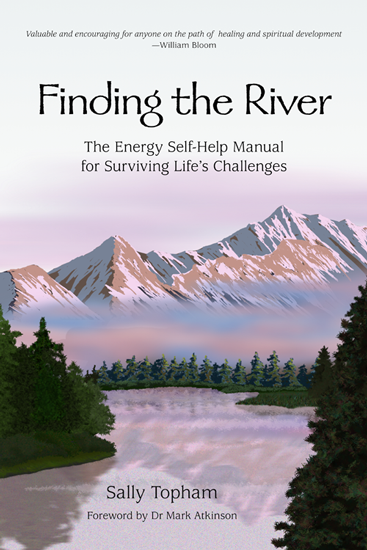
Finding The River is a new book by Sally Topham, an experienced energy therapist, who shares many self help exercises and techniques to help you cope with challenges and learn how to deal with daily rollercoaster of life. She provides exercises and techniques for dealing with stress, burnout, coping with change and coaxing yourself out of limiting comfort zones.
The ‘foundation’ you might expect is there of diet, exercise, sleep and relaxation but it is presented in a framework of giving you ways to expand beyond the physical and embrace ways of healing your body and mind from within. Sally Topham has spent 35 years researching in this field and she will guide you through various meditation techniques sourced from Buddhist, Hindu, and Tibetan traditions; teaches ways to clear your clutter. She Space Clear and create a sacred place in your home. She explains the power of the mind and the value of developing self awareness and the importance of connecting with Nature.
Once you learn how to work with your own energy you will see a substantial difference in how you view life and tackle problems. There are many tips and exercises in this book that you can try and then put together into your own personal energy package. Oh and in case you think this all sounds too ‘new age’, the foreword is written by Dr Mark Atkinson a holistic medical doctor who has seen the benefit of marrying mind body techniques for optimum health.
Finding the River by Sally Topham is available from bookstores or direct from www.dragonrising.com as a hard copy or digital download.
Anti-Aging Hormones Have Little or No Benefit But are High Risk According to AMA

As there is a massive beauty industry postulated on the sure and certain knowledge that most of us want to stay looking young as long as we can, whether from cosmetic surgery, ‘magic’ creams, or eating healthily, it is no surprise that many women have turned to the use of anti-aging hormones.
However all hormones, although natural, are powerful substances and to quote my good friend Dame Dr Shirley Bond ‘should not be taken as a preventive, but for a specific and needed purpose.’ She is backed up by a recently published assessment by the American Medical Association (AMA) of the risks and benefits of growth hormone, testosterone, estrogen and DHEA for anti-aging.
One a leading medical authority in the USA who has criticized the use of anti-aging hormones is Dr. Thomas T. Perls, an associate professor of medicine at Boston University School of Medicine. In an editorial appearing in the Future Medicine journal Aging Health, he applauds the courage and example displayed by the AMA and particularly takes drug companies to task for their use of the words ‘all natural’ relating to drugs that are exactly the same as hormones prescribed by endocrinologists for specific diseases.
The AMA’s review of the risks and benefits of these hormones in relation to anti-aging concludes that the risks of these hormones out-weigh the little or no benefit.
Specific problems with testosterone
By the late 1940s testosterone was being touted as an anti-aging wonder drug and it has specific, and good, medical uses. For women it has prescribed for low sex drive and depression and the side effect most commonly reported is acne and weight gain – due to changes in bone and muscle. However there is a theoretical risk that testosterone therapy may increase the risk of breast or gynaecological cancers, and further research is needed on this link. In 2006 it was reported that women taking Estratest, a combination pill including estrogen and methyltestosterone (a synthetic testosterone), were at considerably heightened risk of breast cancer but this drug was withdrawn.
For men the risk of testosterone therapy can be problems in urinating, and the development of fatty tissue in the breast area.
Whatever you feel about the ageing process it might be wise to discuss any such hormone therapy with your doctor and ask about both the success rate, and the risks.
How Old Is Your Back?

No, not a trick question, because it relates to your posture as it is being moulded by increasing use of online media. There are certainly plenty of online hazards to face, but this one is purely physical as it seems that 74% of social media users report backache, a headache or eyestrain due to their extended computer use. Last week I was highlighting how to protect yourself from radiation from mobiles and computers but the long-term effects of bad posture can have a terrifically negative impact on your overall health.
Anyone who has seen me speak knows I am a devotee of MBT shoes to give me good posture, keep my feet and knees cushioned from impact and activate core muscles that support the spine and joints. Now they have supported a new website at postureage.com where you can find out what your posture age is and what to do if you’re at risk from ‘Social Media Back’. The test asks about daily routines, from how you carry bags to how many pillows you sleep with, and highlighting their bad habits along the way.
All of the 200 people surveyed used their Twitter account, Stephen Fry what did you start, and it was virtually the same for the other social networking sites. Facebook was used by 94% of the sample and 93% for LinkedIn. The worst statistic, healthwise, though is the fact that 95% admit to accessing the Internet in front of the TV or even in bed where good posture is virtually impossible and you risk serious damage to your back.
To maintain the best posture you can while surfing the net try these simple tips:
1. Don’t slouch – imagine you’re being lifted by a thread through the top of your head, like a puppet
2. Sit on chairs that support your back; tempting as it is to sprawl across the sofa
3. Bend your knees, not your back if you need to lift something and never twist and lift at the same time
4. Get up, stretch, and walk around at regular intervals
5. Don’t cross your legs while sitting down as it restricts blood flow. Distribute your weight evenly and sit with your feet shoulder width apart and feet flat on the ground
6. When you are stranding, don’t put all your weight on one foot with your hip jutting out as you are putting strain on your muscles that you will end up paying for
7. Strong core muscles can reduce your chance of back injury so build in regular exercise such as yoga, Pilates, walking or swimming. They are excellent ways to keep you in good general health.
Remember to check out your posture at www.postureage.com and if you want to know more about MBT, the anti-shoe, their website is www.uk.mbt.com
Potential Benefits of Dark Chocolate for Liver Disease and Strokes
May 10, 2010 by AnnA
Filed under featured, Health, Medical Research & Studies

Now you know I never pass up an opportunity to extol the benefits of chocolate whether emotional or physical and here is some diverting news of two potential new medical benefits that could see your doctor reaching for the prescription pad and sending you off to the sweetshop rather than the pharmacy.
First, this is good news for anyone suffering from liver cirrhosis and from dangerously high blood pressure in their abdomen, according to new research presented at the Annual Meeting of the European Association for the Study of Liver in Vienna, Austria. Cirrhosis is scarring of the liver as a result of long-term, continuous damage to the liver. In cirrhosis, circulation in the liver is damaged by oxidative stress and reduced antioxidant systems. After eating, blood pressure in the abdominal veins usually increases due to increased blood flow to the liver. This is particularly dangerous and damaging to cirrhotic patients as they already have increased blood pressure in the liver and elsewhere which, if severe, can cause blood vessel rupture.
According to new Spanish research, eating dark chocolate reduces damage to the blood vessels of cirrhotic patients and also lowers blood pressure in the liver. This can help to minimise the onset and impact of end stage liver disease and its associated mortality risks. Milk or white chocolate won’t do the trick as it is only dark chocolate that contains potent anti-oxidants which reduce the after-eating blood pressure in the liver that is associated with damaged liver blood vessels. Other forms of chocolate do not contain any of the beneficial phytochemicals and so can’t give you the same result.
I also applaud Professor Mark Thursz, MD FRCP, Professor of Hepatology, at Imperial College London who said when commenting on the new research: “As well as advanced technologies and high science, it is important to explore the potential of alternative sources which can contribute to the overall wellbeing of a patient.” A sentence that is music to the ears of all those who want to marry orthodox and alternative methods and you get to eat chocolate too.
Secondly, researchers at Johns Hopkins University School of Medicine have discovered that epicatechin, a compound in dark chocolate, may protect the brain after a stroke by increasing cellular signals already known to shield nerve cells from damage. The study suggests that epicatechin stimulates two previously well-established pathways known to shield nerve cells in the brain from damage. When the stroke hits, the brain is ready to protect itself because these pathways — Nrf2 and heme oxygenase 1 — are activated.
This research was carried out on mice, not humans, and while most treatments against stroke in humans have to be given within a two- to three-hour time window to be effective, epicatechin appeared to limit further neuronal damage when given to the animals 3.5 hours after a stroke.
I don’t have liver problems, or had a stroke, but have always believed in prevention rather than cure so will add a daily supplement of 85% minimum cocoa content chocolate to my current regime – just to be on the safe side – and you may want to do the same!
Protecting yourself – and your children – from the Radiation of Mobiles and Laptops

Those of you who are also regular readers of Catalyst News will have seen in last week’s issue that I talked about a 3 year old on her mobile to her Dad, also on his mobile, at a bus stop. Whatever the rights and wrongs – and I do believe there are plenty on health, relationship and psychological grounds – the one I can address here is health.
There has been much debate about the effects of electro magnetic radiation (EMR) from the regular use of mobile phones and other Wi-Fi devices and today there many families have at least one or more of these devices. The Bio Initiative Report was based on 1500 individual studies which concluded unequivocally that there is sound evidence of harmful biological effects which can damage the body’s immune system and lower resistance to long term serious illness.
So there is now a significant amount of compelling evidence coming to light about the dangers of (EMR) released from the regular use of mobile phones and new Phoneshield and Wi-Fishield devices can help. Their quartz crystal technology helps to diffuse and eliminate some of the potentially dangerous effects of EMR and has been scientifically proven to be effective.
Mobile phone and laptop use have had reported side effects that include: nausea, fatigue, reduced concentration, tiredness, headaches, blurred vision, short term memory loss, muscle weakness and an impaired immune system. In addition, some scientists are concerned that such radiation may cause cancer, brain tumours and early senility, but the current scientific and medical research shows that children are particularly vulnerable to the effects. This is because their immune systems are not yet properly developed and their lifetime of exposure to wire free technology and radiation will be longer and pregnant women are also believed to be more vulnerable.
Phoneshield products are simply attached by means of a strong adhesive pad to the back of a mobile phone, Iphone or blackberry device, and has absolutely no affect on the transmission or signal. To protect yourself from radiation from your computer, there is a Quartz Wi-fi shield that works in exactly the same way as the Phoneshield and that is attached to the back of your computer or laptop monitor to mitigate everyday exposure. The shields are tiny, but are highly effective and quick and easy to fit, they require no technical expertise and have been developed and manufactured in the UK. Phoneshield costs £12.50 and the Wi-fi shield is £14.99 from www.phoneshield.co.uk
As I firmly believe prevention is better than cure, here are some useful tips to minimise your exposure to EMR and stay safe:
• Never leave a mobile phone switched on beside your bed at night
• Keep calls short – don’t have long conversations
• Use a landline where possible instead
• Try to use your phone where there is good reception as this requires less power
• Use the loudspeaker or a hands-free device
• Don’t keep it in your pocket as that puts it close to vulnerable reproductive organs
• Send a text instead of making a short phone call
• Choose cable connections rather than Wi-Fi internet
Fighting Acne with Coconut Milk and Gold

Acne can be a curse, whatever your age, and many a menopausal woman has found herself suddenly the victim of this everyday teenage problem. Research comes in many guises, but I don’t usually associate engineering students with devising health solutions, so full marks to Dissaya “Nu” Pornpattananangkul who has devised an effective delivery system for a natural solution to acne.
She is a bioengineering graduate student from the University of California at San Diego in the Jacobs School of Engineering. There is a natural product found in both coconut oil and human breast milk — lauric acid – that looks set to be a possible new acne treatment thanks to Pornpattananangkul’s work. She has developed a “smart delivery system that is capable of delivering lauric-acid-filled nano-scale bombs directly to the skin-dwelling bacteria (Propionibacterium acnes) that cause common acne.
Many common current treatments for acne have undesirable side effects including redness and burning. Lauric-acid-based treatments could avoid these side effects and the new smart delivery system includes gold nanoparticles attached to surfaces of lauric-acid-filled nano-bombs. The gold nanoparticles keep the nano-bombs (liposomes) from fusing together and also help the liposomes locate acne-causing bacteria based on the skin. Rather like a heat seeking missile, it would seem, and once the nano-bombs reach the bacterial membranes, the acidic microenvironment of the skin causes the gold nanoparticles to drop off. This frees the liposomes carrying lauric acid payloads to fuse with bacterial membranes and kill the Propionibacterium acnes bacteria.
Why they need this ‘Dr Strangelove’ language of bombs and payloads I am not quite sure, but if nuking the acne is what is needed then this sounds like a promising solution and minimises any side effects. Pornpattananangkul, who is originally from Thailand, said that it’s just a coincidence that her research involves a natural product produced by coconuts – a staple of Thai cuisine – but no doubt it will be a welcome boost to that economy.
The good news for acne sufferers is that all building blocks of the nano-bombs are either natural products or have been approved for clinical use, which means they are likely to be tested on humans in the near future and then rolled out to the rest of us. Think of the kudos in telling your friends that your acne responded to being treated with gold!
Loneliness, Blood Pressure and the over 50’s
May 3, 2010 by AnnA
Filed under Health, Healthy Ageing

If that headline strikes a chord then this could be a timely warning to improve your social life and improve your health. As we age we can lose touch with friends and our social circle may be reduced if we are no longer working. Losing a lifelong partner or the support of close family can lead to feelings of isolation and loneliness which can certainly impact your health as is shown by some new research.
Researchers from the University of Chicago have shown that, over time, a sense of loneliness can raise blood pressure, regardless of other risk factors including body mass index (BMI), smoking, alcohol use, race and income level. Of course other factors that can raise blood pressure are depression and stress but they found that neither condition explained the increases seen over the course of four years in people who perceived themselves as lonely.
This research was recently published in Psychology and Aging and was done over five-years as part of a long-term study on participants from 50-75 years of age. The blood pressure increase attributable to loneliness didn’t show up until two years into the study and continued to increase until four years later, the researchers said. They reported that the loneliest people in the study registered blood pressure increases 14.4 millimeters of mercury higher than the blood pressure of the most socially contented participants.
I have discussed before the importance of having strong social networks of support as a sure way of avoiding illness and this reinforces that view. Any social activity that connects you to other people, whether it’s bridge, line dancing, or evening classes, will give your immune system a boost and that’s the first step in staying healthy.
Menopausal Women on Antidepressant Have Increased Risk of a Stroke

A recent study by researchers from the Albert Einstein College of Medicine was recently published in the Archives of Internal Medicine and sounds a warning for menopausal women who are subject to depression.
Depression is already a known risk factor for cardiovascular disease but it seems that taking antidepressants may significantly increase the risk of stroke for women who are post menopause. The study is based on data from the well respected Women’s Health Initiative which was responsible for proving that hormone replacement therapy significantly increased the risk of heart attack, stroke, cancer and death in postmenopausal women.
This was a long term six year study of over 136,000 women between the ages of 50 and 79. They found that those taking antidepressants were 45 percent more likely to suffer from a stroke in that time than women not taking the drugs, and 32 percent more likely to die from any cause. The risk of stroke for a postmenopausal woman taking an antidepressant was roughly one in 200 in each given year and the increased stroke risk from antidepressants remained the same regardless of which drug class women were taking, whether they were selective serotonin reuptake inhibitors (SSRIs) or tricyclics. However SSRIs appeared to pose a higher risk for a hemorrhagic stroke caused by brain bleeding.
The Stroke Association are currently funding further studies to look into the links between depression and the risk of stroke. If you want to reduce your own risk then simple measures to take are to make lifestyle changes such as reducing your blood pressure, giving up smoking, reducing alcohol intake, improving your diet and getting plenty of exercise.
Avoiding Aspartame? Read the Label!

I know I do go on about artificial sweeteners, but they carry health risks and as long as you are aware that you are taking them that is your choice. Artificial sweeteners do have a significant effect on the body’s reaction to other food according to a study conducted by researchers from the National Institute of Diabetes and Digestive and Kidney Diseases. They found they may cause metabolic changes in how the body reacts to real sugar.
If you have decided to avoid aspartame you need to know that those clever marketing chaps have rebranded it and given it a new name – could be all that negative publicity is paying off?
AminoSweet sounds quite healthy doesn’t it with the link to amino acids, vital things that they are, and sweet which of course what we all want from our diet in some form or other.
Their website at www.aminosweet.info tells you that it is a low calorie sweetener that tastes exactly like sugar. True enough, and they reinforce the healthy image by mentioning that it is made from two building blocks of protein just like those found naturally in many everyday foods such as meat, fish, cheese, eggs and milk.
I think this is called health by association, but what they don’t mention is that AminoSweet is aspartame under another name. In case you haven’t heard my rants before, could I remind you that a 2008 study found that aspartame disturbed amino acid metabolism, as well as protein structure and metabolism and neuronal function in the brain. The authors wrote: “Aspartame and its breakdown products cause nerves to fire excessively, which indirectly causes a very high rate of neuron depolarization.”
Another study three years earlier stated even more strongly that aspartame is a multi-potential carcinogenic agent, even at a daily dose of 20 mg/kg body weight, which is much less than the current acceptable daily intake.
Giving up sugar and replacing it with sweeteners is not a healthy option, yes it has few calories but a lot more chemicals so use the sweet options from nature like honey, maple syrup and sugar, just use less of them.
The Health Risks of That Fizzy Drink

In warm weather we turn to a nice cold drink, and often we want one with a bit of fizz to it. But there is mounting research that links carbonated drinks to serious health problems such as cancer and less serious, but debilitating conditions like gout.
US researchers at Georgetown University Medical Centre examined evidence gathered from the Singapore Chinese Health Study where more than 60,000 subjects were followed for as much as 14 years. They came to a startling conclusion: carbonated drinks increase a man’s pancreatic cancer risk.
The really worrying part is that this is not massive consumption, but even drinking just two such beverages a week increased their risk of pancreatic cancer by nearly 90 per cent. Most fizzy drinks are sweetened with high fructose corn syrup (HFCS) and that in itself has raised some health concerns in the US recently where they are big consumers of it.
If you are looking for a healthy addition to the diet to lower the risk of prostate cancer then add in some walnuts. They are a rich plant source of omega-3s, the fatty acids also found in cold water fish like salmon and new research reported in April 2010 reported that they should be part of a prostate-healthy diet.
The other problem with carbonated drinks was discovered by the well respected Framingham Heart researchers in the USA who found that subjects who drank one or more fizzy drinks each day were nearly 45 per cent more likely to develop symptoms of metabolic syndrome, including obesity, increased waist circumference, impaired fasting glucose, higher blood pressure, high triglycerides, and higher LDL cholesterol. These drinks also expose the gastrointestinal tract to a high level of acid and that can lead to gastric distension and acid reflux with a possible potential link to oesophageal cancer.
Men in particular should be careful before popping the top off a can of fizzy drink, as researchers at the University of British Columbia found that men who drank one fizzy drink a day increased their risk of developing gout by 45 per cent and two or more a day nearly doubled the risk.