Forget brain training – This simple exercise can work wonders for your memory

If you think the Internet is a lot of fluff and nonsense — or full of useless trivia — then this piece of information might change your mind. CBS News in Los Angeles featured an unusual exercise to improve mental health and acuity that has created positive results for learning disabled and autistic children as well as older Alzheimer’s victims and the rest of us whose memory can occasionally leave home and leave us wondering why we are standing in the middle of the spare room.
The exercise was introduced by pranic healing Master Koa Chok Sui’s book SuperBrain Yoga and taught by him personally on lecture tours. Prana is another word for Chi, the subtle life force energy that surrounds and permeates the body and the basis of Eastern medicine and practices such as Qi Gong and yoga.
If you still think that’s fluff then you will be surprised to learn it has been endorsed by doctors, a Yale neurobiologist, an occupational therapist, educators, and parents and has gone viral on the internet.. It is a simple routine, and useful for any kind of brain fog or dullness, even emotional instability, and might even make you laugh as well.
It can improve memory and focus, and it’s even made some a little smarter – memo to self, forward this on to the Houses of Parliament, and it seems to work for everyone regardless of mental condition (second reminder to self re the above).
Here’s how to do it
This exercise is suitable for any age but please monitor and respect your own personal level of fitness.
With your feet pointing straight ahead, spread them apart about shoulder width. Grab your right earlobe with the thumb and finger of your left hand. Cross over your left arm and do the same using your right hand on the left earlobe.
Then squat as fully as you can, breathing in. That’s a little counter intuitive, as well as making you feel ridiculous, but that’s apparently what you do.
The breathing needs to be synchronized with the squats, so breathe in as you squat and breathe out as you stand. The instruction is to do this on a loop for three minutes, though I suspect that most of us will start out with one minute and work up. On bad days it might even be 30 seconds, but you can apparently continue for as long as five minutes if you wish to — and your thighs can hold out.
You keep doing this every day until you can feel that mental fog drifting away and certainly you will be able see an improvement in your final sort!
How It Works
According to Los Angeles physician Dr. Eric Robins, the brain cells and neurons are energized with this simple exercise and he certainly has seen good results from his own patients. He gives the example of a youngster doing poorly in school who was given the exercise to do and went on to become an A student.
If you are wondering what the earlobes had to do with it than this explanation from Yale neurobiologist Dr. Eugenius Ang might help. The earlobes grabbed are acupuncture points that stimulate neural pathways in the brain. The brain’s hemispheres are in opposite sides of the earlobes and using opposite hands for pinching the earlobes may have something to do with the way our subtle energies are arranged.
Still too new age and fluffy for you? Well, Ang showed that the results from EEG readings after doing this exercise indicate the right and left hemispheres of the brain had become synchronized. EEG readings measure the neuron firings in the brain via electrodes on the scalp, and are used to determine brain wave normalcies and abnormalities.
Apparently this is the same effect that subliminal sound recordings (as in many new-age CDs) have attempted to do by producing subliminal sounds to the brain attached to audible sounds through a headset. Dr. Ang believes firmly that this exercise really does achieve the brain being actually lateralized, which is apparently an ideal hemispheric arrangement.
What’s more he performs the exercise daily, so if it’s good enough for Yale, then surely it’s worth giving it a try? If you do, I would love to hear how you have got on with it.
Maintaining joint health without glucosamine or chondroitin supplements

If you are suffering from less than perfect joints then there is a new supplement — Regenovex ® – that could help with its unique combination of two natural ingredients.
If you are over 40, or take part in active sports, then you are probably aware that there are two main causes of joint wear and tear: physical damage and internally released harmful chemicals that occur after any physical damage, wear and tear or aging.
Other joint care products and ingredients, for example Glucosamine and chondroitin, tend to tackle only one aspect of joint discomfort, but Regenovex has a unique formulation designed for maintenance of joint health. It is based on two natural ingredients: Natural Marine Bionovex Oil and Hyaluronic Acid rather than the more traditional supplements.
Natural Marine Bionovex® Oil is a pure marine lipid oil derived from New Zealand Green Lipped Mussels (GLM) which are certainly nothing new on the health scene. Many people were introduced to them for help with arthritis for example, but Regenovex contains polyunsaturated fatty acids, including omega-3s, and is particularly rich in eicosatetraenoic acid (ETA), an omega-3 unique to green lipped mussels. ETA has been scientifically shown to have special properties to help maintain joint health and this Bionovex Oil has a concentration of ETA is up to 40 times greater than in conventional green lipped mussel powders.
Marine lipids have been shown to have anti-inflammatory activity in laboratory studies, which is why they first came to the attention of arthritis sufferers, while in various clinical studies, marine lipids have been of benefit to joint health. Marine lipids inhibit both the cyclooxygenase (COX) and lipoxygenase (LOX) inflammatory pathways, and hence have the ability to support the body’s normal processes to alleviate discomfort.
Unlike some conventional drugs, such as non-steroidal anti-inflammatory drugs (NSAIDs), marine-derived lipids have not been associated with the most common side effect of such drugs such as stomach problems or even bleeding.
The second component, Hyaluronic acid® (HA), works in a different way. It is naturally found in the body in a wide range of tissues, including the joint cartilage, and it is a major component of synovial fluid. In the joint, it helps provide lubrication and cushioning as it supplements fluid within the joint, helping to stimulating the joints’ own HA production, supporting the strengthening of cartilage structure, and generally maintaining joint health.
At low levels of impact such as standing and walking, HA’s properties are primarily lubricating but if you are going in for high levels of impact such as running and jumping (lucky you) then HA’s main function is to cushion the joint.
If you have joint problems, particularly osteoarthritis, then you will know that as the cartilage becomes more and more damaged both the amount and structure of HA in the joint changes. This results in further cartilage damage, increased inflammation and a reduction in the synovial fluid function, all of which are bad news for joint health.
As you get older, and certainly if you engage in active sports, it makes sense to be proactive about taking care of your joints. Regenovex is widely available as capsules, instant relief gel, and a patch and a user trial found that it was highly effective, with 74% per cent of people who took the one-a-day capsules noticing a difference within 30 days.
Help for Bad Backs and Knees and Clean Floors!
October 11, 2010 by AnnA
Filed under At Home, Health, Healthy Ageing

I don’t know what it is about getting older, but the knees are definitely not quite as flexible as they used to be and I know from my young relatives that pregnancy also makes getting down to the floor more of a problem. If you just want a quick clear up and don’t want to have to do drag out the Hoover — and you certainly don’t want to get out the dustpan and brush — then I have been trying out something that you might find helpful. It’s a cordless Power sweeper that is rechargeable and also seems to be very helpful for a friend with arthritis in her hands who has also been trying it for me.
I always like to see British design and the Gtech Cordless Power Sweeper is based in Worcestershire and is apparently selling well to pregnant women and those of us for whom the floor has got rather farther away than it used to be. Lifting heavy items whether you are pregnant, or have a bad back, is not advised and sadly many household vacuum cleaners are fairly heavy.
The Gtech has the advantage of weighing only 1.6kg and is fully rechargeable so you are not trailing any flex either. It will not replace your vacuum cleaner as it has only a small slide out drawer to collect dust and debris, but it is invaluable for day-to-day light use and the manufacturers claim that it will even pick up glass — which happily I never had to put to the test.
What certainly surprised me is that having invested in a specific (and very expensive) cleaner for dealing with pet hair this small sweeper actually pulled up more hair out of the carpet and is much more efficient than I would have expected.
It will be useful for anyone with problems with their back, or bending, but the telescopic handle has a very unconventional shape – like a large firm loop -which makes it very comfortable to hold for anyone who has problems with their hands and its swivels easily to make the sweeper of a flexible in use. The friend with arthritis who used it certainly found it much easier to use and more comfortable than the conventional handle on a vacuum cleaner.
You should find it in most high street retailers including Argos, Comet, Currys, Lakeland and Robert Dyas but in case of difficulty go to their website at www.gtechonline.co.uk
Food is the major source of human antibiotic exposure
October 6, 2010 by AnnA
Filed under Health, Medical Research & Studies

I have often spoken — indeed quite recently — about the dangers of the overuse of antibiotics and you may have patted yourself on the back and thought ‘well I hardly ever have them’ — but I bet you do.
The problem is that you are probably not even aware of it — particularly if you are a meat eater. A new study has shown that what you ingest from your diet is an important factor in the levels of toxicity in your body.
In a conventional, Western, diet you are taking in the antibiotics and hormone growth promoters that are routinely fed to cattle and intensively farmed salmon and chicken and through the pesticides used in modern intensive farming. This can leave you with quite a high level of toxic chemicals in your body — if you are a wholly organic vegan, you can skip the next bit but everyone else might find it of interest.
In order to test the theory that vegetarians are healthier, scientists recruited 25 people to stay at a Buddhist temple for five days, living the same lifestyle as the monks residing there. This lifestyle included adhering to a strictly meat-free diet and I imagine was also fairly stress-free, unless they were suffering severe withdrawal symptoms from their iPhones and computers..
The researchers took urine samples from all participants both 48 hours before and immediately after their five-day retreat and it was tested for antibiotics and their metabolites, as well as six chemicals produced by the body upon the breakdown of phthalates.
What are phthalates I can hear you cry? They are industrial chemicals used in the manufacture of pesticides and soft plastics and have been proven to interfere with our bodies hormonal systems, producing defects of the reproductive, nervous and other bodily systems. Because it is difficult to detect phthalates in urine, the researchers instead had to test for its metabolites.
All six phthalate metabolites were detected in every participant both before and after the study, but levels of levels of all drugs had dropped dramatically. and five metabolites had significantly dropped over the course of the study. That is in just five days — which is quite impressive.
These findings suggest that food is one of several sources through which humans are exposed to phthalates. The researchers found that participants who had eaten more beef, pork and dairy prior to the study started out with higher phthalate levels than participants who had eaten less of those foods.
The good news is that it is relatively easy to reduce the level of drugs and toxins in the body by switching to a diet that contains less meat and more vegetarian sources. I am not suggesting you give up meat altogether, but one idea for a healthier diet is certainly to have at least one or two meals a week that are meat-free.
Dealing with stress and anxiety – learn the uses of flower remedies for free

I have used flower remedies for a good number of years, and from many different sources, but the original and oldest are those from Dr Edward Bach and his 38 Original Flower Remedies™.
They are incredibly simple to use, have no side-effects or interactions with any other form of treatment, and are very effective particularly for nervous or emotional states and healing emotional imbalances such as depression, fear and stress. They are freely available, indeed are now stocked by Boots the chemist which shows how mainstream they have become.
You can consult with a registered practitioner, and they are simple to use and self diagnose but it would be better to have more in-depth knowledge of what each particular remedy can do if you want to do that.
Now you have the chance to learn how for free with an online introduction course. The course has come about as a result of a poll looking at the nation’s most popular emotional reactions to pressure and that is the theme of the new course.
Apparently most of us respond to pressure by worrying and becoming anxious, eat and drink the wrong things, become snappy or angry and a smaller number either overstretch themselves or become withdrawn. Hands up if you recognise any of those states?
If you would like to know how to deal with life’s pressures, but haven’t time to do the course, then here are some suggestions :
** Worrying and being anxious – If you are worrying about a specific situation, such as a job interview, Mimulus can help you to face your fears and Larch can help you regain your confidence if you are worrying you will fall at the first hurdle.
** Eating and drinking the wrong things – If you find yourself making the same food and drink mistakes again and again when under pressure, Chestnut Bud can help you to break the repetitive cycle and if your comfort eating makes you feel unhappy with yourself, Crab Apple can help to boost your body image.
** Becoming snappy or angry – If you find yourself snapping at those around you, Impatiens can help calm your frustration and if you have a tendency to fly off the handle, Cherry Plum can help you to keep control of your emotions.
** Becoming withdrawn – If you spend a lot of time feeling nostalgic for the past, Honeysuckle can help you to move on with your life and daydreamers can try Clematis which helps brings you back to reality allowing you to fully focus on the task at hand.
** Overstretching yourself – If you get so worked up and passionate about your endeavours that you have no time to relax, Vervain can help you readdress the balance. If you find it hard to say ‘no’ and stand up for yourself then Centaury can help and if it all gets too much and you feel completely overwhelmed, Elm can help you put things into perspective.
Personally, the one I am never without is Rescue Remedy which is a combination that is highly valuable to treat anyone who is upset and anxious or in shock and it seems to come out of my bag more often for other people than myself — but it is a very useful thing to carry.
It is possible to combine several remedies at once, as in Rescue Remedy the before making up your own mix can I suggest that you take the course and learn a little more about it.
The online Bach flower remedies introduction course can be accessed free at www.bachintro.com
If you would like general information, or to buy individual remedies, then go to www.bachfloweressences.co.uk where you can use the Remedy Chooser. This is a simple one page form that asks you to enter the emotions you are feeling and once you have completed this, based upon your responses it will design the correct remedy for you.
Pregnant women and breast cancer — the good news

It is a widely held belief both by the public and the medical profession that women treated for breast cancer while pregnant will have a worse outcome than women who are not pregnant. Now the good news is that with current treatment such women do in fact have an improved rate of disease-free survival and a trend for improved overall survival.
This research has been done by the University of Texas MD Anderson Cancer Center and presented at the 2010 Breast Cancer Symposium. The researchers put it down to the fact that previous treatment for pregnant breast cancer patients meant they were not always given the standard of care chemotherapy available. Another factor is that they also often refused or delayed their therapy until after delivery due to a belief that it could be harmful for their unborn child.
Certainly we know that chemotherapy, although designed to kill cancer cells, can be damaging to the body and the immune system so their fears were realistic and not unfounded. However, more recent studies have shown that since 1992 a chemotherapy regimen was deemed safe for both the mother and unborn child.
The reasons for the disease-free and overall survival discrepancy are still unknown according to their chief researcher, who stated that understanding their findings is of research priority. What I wonder though, is whether they haven’t missed a very basic and vital factor when considering the mortality rate of pregnant women with breast cancer. That is the human will, and a powerful desire to stay alive for the unborn child.
I have written much on our ability to heal ourselves through our own attitude as much as the health care regimes that we adopt and I would have thought that protecting the life of a child, through preserving the health of the mother, was one of the most powerful motivating factors for a woman that you could find.
We know that our thoughts influence our physical responses; positive thoughts produce a different balance of hormones and chemicals in the body than do negative ones.
Belief and Cancer Care
Whether pregnant or not, anyone dealing with cancer in any form is well advised to consider their own state of mind alongside any treatment they are taking. I have mentioned before the music by Sulis, used and researched by the Bristol Cancer clinic, to help reduce blood pressure and anxiety and promote calmness in their patients and families.
I make no apologies for repeating it, as it is an invaluable aid for anyone wanting to promote a more calm and healthy state of mind and you will find it on this website www.sulismusic.com – together with more information on that research.
The album that I listen to constantly from Sulis is called Chameleon and you can listen to tracks from it on their website.
Krill – a better form of Omega 3?
September 29, 2010 by AnnA
Filed under featured, Food & Nutrition, Health, Vitamins & Supplements

The health benefits of Omega 3 are well known for helping with cardiovascular and cholesterol support as well as anti-inflammatory properties which may help arthritis and joint pain and is linked to improvements in memory and brain function.
If you already are a convert then you certainly have a huge variety of supplements to choose from and here is a new one from Silvertown Health and their source is pure Antarctic Krill.
The Krill population of the world has been estimated as outweighing the human population of the world which certainly came as a surprise to me, as the only thing I really know about krill is that it is a favourite food of whales. This particular variety of small crustaceans is found in the Antarctic peninsula and apparently, their Omega-3 oils are in a phospholipid form which is suggested as far more beneficial and potent than the triglyceride structure found in normal fish oil supplements.
Krill oil, unlike fish oil, also contains Astaxanthin, one of the most powerful antioxidants known to man (or indeed woman) and said to be 300 times more powerful than the antioxidant vitamins A & E and 34 times more powerful than Co Q10.
Antioxidants are vital in supporting the immune system and reducing DNA damaging free radicals.
It seems that Silvertown Health Krill Oil is harvested ethically by a leading European krill oil harvester (though I would have thought that the whales had first claim on that as it is one of their most essential forms of food) and has Novel Food Approved status-whatever that may be. I would have thought anything that was essential to health was hardly novel, but perhaps the krill are great readers. However, as they are monitored by the World Wide Fund for Nature and the Marine Stewardship Council to ensure strict environmental standards that probably balances itself out.
If you want to try Krill oil you should be able to find it in most good health stores and you only need one 500mg capsule a day to feel the effects. If you want to go the ethical route as well – buy it online from Silvertown here: Krill Oil
How to improve the appearance of scars

When I suffered a car crash in the 1980s I was left with a prominent and rather unattractive scar on my arm, due to it being stitched in A&E by a nurse who had worked rather too long hours and seeing I suspect too many car accidents. What I wish had been available in time is a new product that came across my desk this week to help prevent, improve and reduce scarring.
Lily-C™ Silicone Scar Therapy wrap moulds to the natural curves of the body, helping to reduce redness and relieve the itching and discomfort associated with wounds. Used properly the manufacturers claim that it will soften, flatten and dramatically improve the appearance of your scar. Scarring can occur from many causes; whether they are post operative, accidental or a sports injury but they can all cause not just physical but emotional suffering as well.
Anything that can reduce that impact has got to be worth looking at and silicone scar therapy is clinically proven in the prevention, improvement and reduction of scarring. The silicone provides a protective barrier which occludes and hydrates skin helping to encourage its natural healing properties.
This product was originally designed for women who had had a Caesarean, but it was then realised that it could be used on all scars. It consists of a skin like layer of silicone measuring 5cms x 22cms and has an adhesive free lining allowing it to gently adhere to the skin without the use of irritating adhesives or additional taping. One additional benefit is that it also comes with a special LilyWash™ that is designed to gently cleanse Lily-C™ and renew the tacky lining allowing it to be used over and over again.
LilyPadz Lily-C Silicone Scar Therapy has a RRP of £34.99 and is available from Boots. If you have any difficulty, please visit the website at www.simplylily.co.uk or you can telephone the company on 01753 202330.
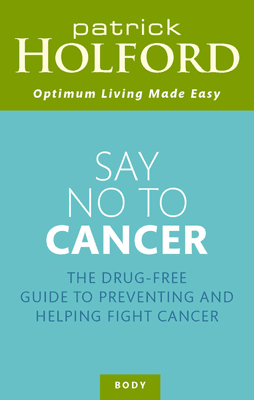
Say No to Cancer

Experts are now predicting that our Lifetime cancer risk is going to be 1 in 2 by 2020 – a mere 10 years away. In fact, it is one in three already and top nutritionist and author Patrick Holford believes that most of this risk is completely avoidable by simple changes to both diet and lifestyle factors which expose us to a plethora of carcinogens, which promote cancer cells and also suppress the immune system.
It may be comforting to believe that great strides are being made in cancer treatment, but Holford believes that nothing substantial has changed. According to the Journal of the American Medical Association, there has been less than a 1% decrease in the rate of new cancer diagnosis and neither the death rate nor the incidence of new cases has changed.
Treatment is one thing but for prevention – both before and after diagnosis – to be effective, it has to respect the fact that the cancer process is multifactorial. It depends on:
a) Reducing exposure to carcinogens, of which there are thousands in our modern environment and diet;
b) Improving one’s ability to repair damaged DNA;
c) Controlling factors that stimulate cell growth, which include common ‘insulin resistance’ and drinking milk; and
d) Diet and lifestyle habits that strengthen immunity – from vitamin D and sunlight exposure to eating berries and upping antioxidants.
If a person has cancer, or early-stage cancer risk, these prevention factors have to be applied aggressively, not just as advice to ‘eat a well balanced diet’. There have been in reality no substantial change in cancer treatment and although surgical procedures have slightly improved they don’t actually address the underlying cause.
In his new book ‘Say No to Cancer’ Holford outlines the real strides that have been made in nutrition-based anti-cancer strategies that both kill cancer cells and boost immunity, rather than weaken it, as does chemotherapy and radiation. He discusses two of the most promising treatments which are intravenous and/or megadose vitamin C and salvestrols, both of which show promise.
Everyone knows that eating fruits and vegetables is good for your health. Conventional medical advice is to eat at least five portions a day and evidence shows that a diet rich in plant-based foods helps to combat many diseases, especially cancer. What is now becoming clear is that there is more than one single mechanism whereby plants are able to help prevent and reverse the cancer process.
A dedicated team of research scientists in Leicester believe that a key component, and a mechanism, in plants could be a major breakthrough in both cancer prevention and treatment. They believe that salvestrols, naturally occurring compounds in certain plants, can help to explain how plants offer a treatment for cancer with fewer side effects than conventional treatments.
Salvestrols are a group of naturally-occurring plant compounds present in certain fruits and vegetables, they contain substances which can be changed by an enzyme, present in both pre-cancerous and cancerous cells, to produce a toxic chemical which brings about ‘cell death’ (apoptosis) and therefore destroys the cancer cells.
He had written a previous version of this book, but Patrick Holford found that in the last decade there has been so much positive research showing how to make yourself cancer-proof that he has completely rewritten Say No to Cancer, to more than double the size, and is doing a nationwide tour, both in the UK and Ireland, to help you learn the simple tricks to boosting your body’s own defences against cancer, and also infections, and how to stack all the odds in your favour to never get cancer.
For information on Patrick’s forthcoming seminars, and to buy the book please visit his website at www.patrickholford.com
Cognitive decline can start in the womb in malnourished pregnancies
September 22, 2010 by AnnA
Filed under Health, Healthy Ageing, Medical Research & Studies

One of the conditions that most frightens us, and has seen such a rapid increase in the last 50 years, is Alzheimer’s with its accompanying cognitive decline. Now there is an interesting new approach based on a recent retrospective study that seems to indicate that poor or inadequate nutrition during the early part of pregnancy appears to accelerate cognitive decline in later life for the baby.
This work has been based on a study of people exposed to severe prenatal malnutrition in the Netherlands during World War II, but I believe also has great significance for the increasing number of people in the West who are on nutritionally poor diets. This was a regression analysis of almost 300 men and women born in Amsterdam during a severe food shortage in the winter of 1944 to 1945 and what the researchers found was that those conceived during that period (and considered to be exposed to famine in utero) performed significantly worse when tested for selective attention at ages 56 to 59.
During the winter of 1944 and 1945, a severe food shortage struck the western Netherlands as a result of a German embargo on food transport in response to a Dutch railway strike intended to hamper German troop movements. Food rations among this normally well-nourished population rapidly fell to as little as 400 to 800 calories per person during the five to six months of famine.
Susanne R. de Rooij, PhD, of the University of Amsterdam, led the study and she hypothesized that because the Dutch group had previously associated prenatal exposure to famine with coronary heart disease and diabetes — both aging-related chronic diseases — that this early exposure may also lead to premature age-related cognitive decline.
Indeed, they found on regression analysis that exposed individuals performed significantly worse in cognitive function tests than those who had not suffered this nutritional devastation. The study subjects were 56 to 59 years of age and undertook a general intelligence test, a perceptual motor-learning task, a memory task, and a selective attention task.
The participants did no worse than the control group on any of the tests except for that of selective attention. The researchers have speculated that those exposed to malnutrition during the first part of pregnancy are most vulnerable and a possible explanation is because of the effect of malnutrition on the development of the central nervous system, which occurs early in gestation. Another possibility is that the cognitive decline reflects vascular damage, which is supported by the researchers’ previous finding that famine exposure was associated with dyslipidemia and coronary heart disease.
Why these findings affect all of us:
This is not a definitive study, but I do think it’s worth paying attention to. The effect of nutrition on development throughout life is well known and I, along with many others interested in natural health, definitely see a link between the increase in conditions such as Alzheimer’s and the worsening dietary habits in the West.
We know from previous research that the vitamin and mineral content of food has been seriously depleted by modern farming methods and the overuse of pesticides and antibiotics in the animal food chain. Much of what we eat is nutritionally barren, and an addiction to fast foods, sugar and empty calories is leading to the current generation, who are the parents of the future, passing on their own nutritional deficiencies to their children.
Those who are trying to start a family know that the best advice they are given is to make themselves as healthy as possible in order to have a truly healthy baby. I have previously touched on the decline in both numbers and potency of the current generation’s sperm due to the environmental effect of such things as xenoestrogens and we also know that whatever the mother takes into her body during pregnancy will pass through the placenta to the baby. A generation reared on Diet Coke and McDonald’s are not essentially giving their unborn child the best start in life.