Don’t Fight Dandruff With Chemicals

No one likes to have dandruff, and there are plenty of shampoos and products on the market to help with unsightly white cloud. It’s tempting to just reach for the nearest bottle of antidandruff shampoo, but if you take a few moments to read the ingredients you might want to think again as they often contain harmful chemical substances such as coal tar that can have damaging effects on your health as it particularly it has been linked with kidney or liver problems. There are some much simpler, pleasanter and more natural methods of dealing with dandruff by using herbs, essential oils, vitamins and minerals.
You certainly know when you have dandruff, as the visible signs are obvious to you and everyone else. Do you know why you get it? It happens when the fine cells of the outer layer of skin on the scalp are shed at a faster rate than normal, causing flakes to fall and this is caused by a disorder of the sebaceous glands. If too little sebum is secreted, the hair is dry and dandruff appears as white flakes; if too much sebum is produced, the hair is greasy and the dandruff is a waxy yellow. If your scalp is inflamed and itchy then it’s likely you have seborrheic dermatitis, a severe form of dandruff, and eczema, allergies to hair products and psoriasis may also cause it. Also, if you have a shortage of the minerals zinc and selenium, and vitamin E, vitamin C and vitamin B complex in your diet than that can also contribute to your getting dandruff.
To tackle it yourself, an old herbal remedy is to rub rosemary-infused oil into the scalp before washing. Rinse greasy hair with rosemary vinegar or add a few drops of rosemary essential oil into rinsing water. Herbs that improve the condition of the scalp include burdock, kelp and heartsease.
Aromatherapy solutions for dandruff are cedarwood, tea tree or patchouli – all of which can be massaged into the scalp by blending a few drops of your chosen essential oil with a carrier oil, such as jojoba. You can also massage the scalp with a few drops of lavender oil and almond oil to eliminate dandruff.
Another tried and trusted remedy is to use tissue salts and these usually needs to be taken over a fairly long period of time. Tissue Salt No. 5 is Kali. Mur. And this is the one to take if you have white, flaky dandruff but be aware that sometimes the dandruff may get worse at the beginning. You can also add Kali. Mur. to your diet by increasing foods such as green beans, carrots, beetroot, fresh corn, kale, asparagus, pineapples, lemons and plums.
One of the most useful tissue salts for sticky, waxy dandruff; with flaky, dry patches on the scalp as well as alopecia (hair loss) is Tissue Salt No. 6 – Kali. Sulph. Increase the amount of parsley, linseed, mustard, watercress, and the herb lemon balm.
One of the most useful salts is No. 12 – Silica for both treating dandruff, improving the condition of dull and lacklustre and keeping the scalp healthy. Herbs and foods rich in silica are stinging nettle, dandelion, comfrey, wheat, maize, barley, oats, apples, guavas, spinach, chicory and celery.
Diabetes Help from the Baby Jackfruit

The figures for diabetes in the UK are worrying, and increasing. There are currently 2.3 million people diagnosed with diabetes and more than 500,000 believed to have the condition but aren’t aware of it. Within 15 year, at the current rate of increase, it is thought that there will be an additional 1.3 million people with the condition which is the equivalent of a 46% increase.
Like many conditions, diabetes can be helped by a dressing diet and lifestyle. One new element on the horizon is the Baby Jackfruit – an unusual and interesting red skinned fruit from Asia which has been seen to have potential health benefits for diabetes sufferers.
Baby Jackfruit, is known as the ‘fruit from heaven’, and is used for food and medicinal purposes across Southeast Asia. It is hardly ever seen in Europe because it fruits only once a year and so is found mainly in local markets at the right time of year.
Recent studies have shown that Baby Jackfruit has been found to be very high in a molecule called beta-carotene, which is a vegetable form of Vitamin A and it is thought that many diabetics suffer from a lack of this nutrient due to poor diets. There are a number of studies that indicate vitamin A may be beneficial for those suffering with diabetes and a clinical trial on 52 healthy volunteers showed that there is a distinct relationship between the amount of Vitamin A you have in your body and the speed at which the body can dispose of glucose. This could potentially be valuable for type 2 diabetes sufferers as it is the inability to break down glucose, and hence its high levels in the blood, that can cause health problems.
Jackfruit contains by far the highest content of beta-carotene of any known fruit or vegetable, 10 times higher than carrots for example and research has confirmed that the beta-carotene (Vitamin A) it contains is highly bioavailable to humans. In a double-blind study, based on 185 subjects, people were either given 3.5mg of beta-carotene from Baby Jackfruit, or an identical looking preparation of 5mgof beta-carotene powder. After 30 days, the former group, eating natural beta-carotene from the Baby Jackfruit, had significantly greater plasma (blood) levels of beta-carotene than the latter, who used synthetic beta-carotene.
Another benefit of eating vegetables rich in carotenoids, such as beta-carotene found in Baby Jackfruit, is that they are thought to help protect against raised blood glucose levels and may well be a preventative factor in hyperglycemia. This benefit of the metabolism of glucose from eating carotenoids from fruit and vegetables has also been shown in men at high risk of type 2 diabetes, and so may well help in the disease developing in the first place.
You may well struggle to find it in your local supermarket, though if you have a good Asian market you may be lucky enough to find it there. If you are interested in trying it, then a supplement is probably going to be your best bet. If your local health store can’t help you, then the first one available in the UK can be obtained at www.drinkherbaltea.co.uk as capsules that contain baby jackfruit oil that is naturally extracted.
AnnA’s Solution to Breakfast
May 26, 2010 by AnnA
Filed under Food & Nutrition, Health

I am the world’s worst at getting organised for breakfast. What I do know is that unless I have some protein first thing in the morning I really don’t function very well, but I am also not up for cooking or spending a lot of time preparing. As I dislike most grains and certainly muesli, I have been experimenting with finding a breakfast that is fully sustaining, quick and easy to prepare.
I have settled on a combination that is part green, part fruit, part protein and certainly delicious. I have shared this recipe with others who seem to have agreed with me so I thought it would be good to share it with you in case you have one of those mornings too!
The ingredients are very variable, depending what’s on what’s in the fridge, but here is the most common combination:
Organic yoghurt — vanilla in my case
Soymilk or oat, or rice milks
Banana and/or avocado
handful of young spinach or watercress leaves
Tablespoon of protein powder from Higher Nature or a vegetarian source
Tablespoon each of Linwoods milled flaxseed and almonds and flaxseed cocoa and berries
The amount of yoghurt and milk is a matter of taste – the yoghurt makes it thicker and the milk will thin it so experiment to get your personal blend. Stick everything in a blender with a few ice cubes and blast it until it’s smooth. Adjust the liquid to your taste, and I usually add more liquid at the end. This makes enough for two, so if you are dining alone just put the rest in a sealed container in the fridge and it will be fine for 24 hours – just stir before drinking. In summer I will add strawberries or raspberries and in winter I will often use frozen berries as they give it a wonderful coldness and colour. Very healthy, delicious and sustaining. If you try it, let me know what you think.
The Benefits of Krill the Crustacean – and a Vegetarian Alternative
May 25, 2010 by AnnA
Filed under Health, Vitamins & Supplements

I almost said the thrill of the kill, but that would’ve been a pun too far! Maintaining good levels of EPA and DHA, the fatty acids which play a key role in heart and brain health and lowering the risk of depression. What the latest buzz is from across the pond, these watery metaphors have got to stop, is that a good if not the best source of these elements is to be found in a tiny crustacean in Antarctica. The krill is a mini powerhouse of nutritional benefit and when its oil is harvested it delivers a potent blend of antioxidants, omega-3 fatty acids and phospholipids.
I am always wary of the phrase ‘super food’ but this does seem to be a new way of getting the benefits of fish oil in supplement form and without the corresponding fishy smell or taste. CardioRedTM has a pure high-strength krill oil that is sourced from sustainable live krill harvests using the latest eco-friendly technology – and with 100 per cent traceability it comes from a single source, euphausia superba. –
Unlike traditional fish oils, the lipids in CardioRed Krill Oil capsules take the form of bound phospholipids, which are more easily absorbed by the body. They also contain astaxanthin, a powerful natural antioxidant. You should be able to find CardioRed Krill Oil capsules, in your local health store that if you have any difficulty go to their website at www.cardiored.co.uk.
For vegetarians, add plenty of walnuts to your diet as they are a rich plant source of omega-3s, the fatty acids also found in cold water fish like salmon and krill. Also men who are concerned about their prostate, should include walnuts as part of a balanced diet that includes lots of fruits and vegetables as they have been shown to help reduce the risk and help to treat the condition.
Daily Aspirin Use Linked to 5 Times Increased Risk of Crohn’s Disease

A number of healthy people are taking a low dose aspirin on a daily basis as a preventive for heart disease, though it’s value has been disproven as recently was reported on the NHS website. Previous research work on tissue samples has shown that aspirin can have a harmful effect on the bowel and there is a reported risk of dangerous internal bleeding, though no beneficial effect on reducing the incidence of heart attacks or strokes, on doses of 100mg aspirin daily.
These are healthy people taking what they believe is valuable preventive action but it almost doubles the risk of dangerous internal bleeding compared to dummy pills (placebo), and if you are taking daily aspirin for a higher vascular risk then consult your doctor before stopping taking it, but there is now also a new risk associated with it, particularly if you have been doing so for over a year.
According to a new study led by Dr Andrew Hart at the University of East Anglia, in conjunction with 200,000 volunteers from the UK Sweden Denmark Germany and Italy, and are are they found that those taking aspirin regularly for a year or more were around five times more likely to develop Crohn’s disease. Further, the study also showed that aspirin use had no effect on the risk of developing ulcerative colitis — a condition similar to Crohn’s disease.
Crohn’s disease is a serious condition affecting 60,000 people in the UK that is characterized by inflammation and swelling of any part of the digestive system. This can lead to debilitating symptoms and requires patients to take life-long medication. Some patients need surgery and some sufferers have an increased risk of bowel cancer.
Although this may seem a rather frightening link, the actual numbers of people contracting Crohn’s disease remains very low — only one in every 2000 users and further research is being carried out, particularly in relation to other potential causal factors including diet.
Snoring, Sleep and Natural Solutions

The Benefits of Power Napping

I often rail against unnecessary research, but I confess to a sneaking liking for researchers from the University of California, Berkeley, who have just found that people who take naps during the day are helping to improve their overall brain function.
See, I knew there was a good reason the cats and I closed our eyes after lunch though not for the time frame the researchers were using. Apparently the healthy adults they evaluated in their study were allowed a nap for an hour and a half during the day and then given a cognitive exam.
This was based on a “hard learning” morning task for which all participants performed roughly the same but the difference came later. Half the group then took a nap while the others stayed awake and following the nap everyone repeated the exam. This time, the group that napped performed better than the group that stayed awake – how good is that for when you next have to justify closing your eyes for an hour or so?
Scientists, bless them, have long been trying to discover whether or not mid-day naps are beneficial – presumably without trying them out personally. What the California research seems to suggest is that naps help us process short-term memories into long-term ones, clearing the temporary storage portion of the brain so that new information can take its place. They looked at the subjects’ brain electrical activity and found that the nappers were in a sleep phase somewhere between deep sleep and dreaming sleep. During this time, temporary memories move from the hippocampus to the pre-frontal cortex.
Dr. Matthew Walker, lead author of the study, has a very 21st century way of explaining it as like your e-mail inbox becoming full. Until we sleep, or take a nap, all the new information received since the last sleeping period remains in hippocampus. Once it is full, no new information can be readily processed, inhibiting us from fully functioning throughout the entire day.
There was a dissenter to the new findings, however in Professor Derk-Jan Dijk. He is the Director of the Surrey Sleep Research Centre in the U.K. and doesn’t see that there is necessarily a clear advantage to sleeping more than once in a 24-hour period. He explained that, outside of the lab in the real world, it is difficult to assess whether or not taking a mid-day nap provides the type of cognitive benefit observed in the laboratory. It may simply help someone who was tired to have more post-nap energy and brain functionality.
Not sure how old Professor Dijk is, but I can promise him that a refreshing afternoon nap definitely gets more attractive as you get older!
The Energy Self Help Manual

I know that most of the time I give you hard news from the alternative and mainstream medical worlds, but occasionally I like to expand our horizons and introduce you to an aspect of health that may not be as familiar to you.
We all face challenges in life and these are then reflected in our health and wellbeing and one way to maintain a strong immune system is to work with, rather than against, your own energy.
Finding The River is a new book by Sally Topham, an experienced energy therapist, who shares many self help exercises and techniques to help you cope with challenges and learn how to deal with daily rollercoaster of life. She provides exercises and techniques for dealing with stress, burnout, coping with change and coaxing yourself out of limiting comfort zones.
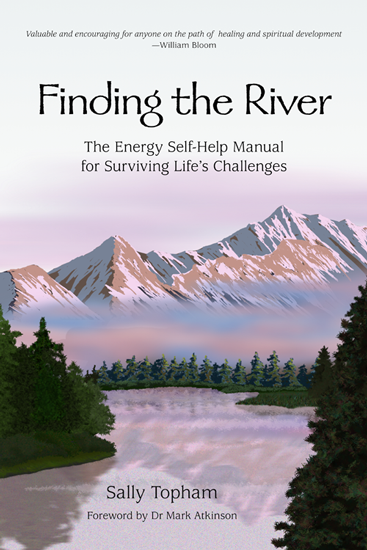
The ‘foundation’ you might expect is there of diet, exercise, sleep and relaxation but it is presented in a framework of giving you ways to expand beyond the physical and embrace ways of healing your body and mind from within. Sally Topham has spent 35 years researching in this field and she will guide you through various meditation techniques sourced from Buddhist, Hindu, and Tibetan traditions; teaches ways to clear your clutter. She Space Clear and create a sacred place in your home. She explains the power of the mind and the value of developing self awareness and the importance of connecting with Nature.
Once you learn how to work with your own energy you will see a substantial difference in how you view life and tackle problems. There are many tips and exercises in this book that you can try and then put together into your own personal energy package. Oh and in case you think this all sounds too ‘new age’, the foreword is written by Dr Mark Atkinson a holistic medical doctor who has seen the benefit of marrying mind body techniques for optimum health.
Finding the River by Sally Topham is available from bookstores or direct from www.dragonrising.com as a hard copy or digital download.
Anti-Aging Hormones Have Little or No Benefit But are High Risk According to AMA

As there is a massive beauty industry postulated on the sure and certain knowledge that most of us want to stay looking young as long as we can, whether from cosmetic surgery, ‘magic’ creams, or eating healthily, it is no surprise that many women have turned to the use of anti-aging hormones.
However all hormones, although natural, are powerful substances and to quote my good friend Dame Dr Shirley Bond ‘should not be taken as a preventive, but for a specific and needed purpose.’ She is backed up by a recently published assessment by the American Medical Association (AMA) of the risks and benefits of growth hormone, testosterone, estrogen and DHEA for anti-aging.
One a leading medical authority in the USA who has criticized the use of anti-aging hormones is Dr. Thomas T. Perls, an associate professor of medicine at Boston University School of Medicine. In an editorial appearing in the Future Medicine journal Aging Health, he applauds the courage and example displayed by the AMA and particularly takes drug companies to task for their use of the words ‘all natural’ relating to drugs that are exactly the same as hormones prescribed by endocrinologists for specific diseases.
The AMA’s review of the risks and benefits of these hormones in relation to anti-aging concludes that the risks of these hormones out-weigh the little or no benefit.
Specific problems with testosterone
By the late 1940s testosterone was being touted as an anti-aging wonder drug and it has specific, and good, medical uses. For women it has prescribed for low sex drive and depression and the side effect most commonly reported is acne and weight gain – due to changes in bone and muscle. However there is a theoretical risk that testosterone therapy may increase the risk of breast or gynaecological cancers, and further research is needed on this link. In 2006 it was reported that women taking Estratest, a combination pill including estrogen and methyltestosterone (a synthetic testosterone), were at considerably heightened risk of breast cancer but this drug was withdrawn.
For men the risk of testosterone therapy can be problems in urinating, and the development of fatty tissue in the breast area.
Whatever you feel about the ageing process it might be wise to discuss any such hormone therapy with your doctor and ask about both the success rate, and the risks.
How Old Is Your Back?

No, not a trick question, because it relates to your posture as it is being moulded by increasing use of online media. There are certainly plenty of online hazards to face, but this one is purely physical as it seems that 74% of social media users report backache, a headache or eyestrain due to their extended computer use. Last week I was highlighting how to protect yourself from radiation from mobiles and computers but the long-term effects of bad posture can have a terrifically negative impact on your overall health.
Anyone who has seen me speak knows I am a devotee of MBT shoes to give me good posture, keep my feet and knees cushioned from impact and activate core muscles that support the spine and joints. Now they have supported a new website at postureage.com where you can find out what your posture age is and what to do if you’re at risk from ‘Social Media Back’. The test asks about daily routines, from how you carry bags to how many pillows you sleep with, and highlighting their bad habits along the way.
All of the 200 people surveyed used their Twitter account, Stephen Fry what did you start, and it was virtually the same for the other social networking sites. Facebook was used by 94% of the sample and 93% for LinkedIn. The worst statistic, healthwise, though is the fact that 95% admit to accessing the Internet in front of the TV or even in bed where good posture is virtually impossible and you risk serious damage to your back.
To maintain the best posture you can while surfing the net try these simple tips:
1. Don’t slouch – imagine you’re being lifted by a thread through the top of your head, like a puppet
2. Sit on chairs that support your back; tempting as it is to sprawl across the sofa
3. Bend your knees, not your back if you need to lift something and never twist and lift at the same time
4. Get up, stretch, and walk around at regular intervals
5. Don’t cross your legs while sitting down as it restricts blood flow. Distribute your weight evenly and sit with your feet shoulder width apart and feet flat on the ground
6. When you are stranding, don’t put all your weight on one foot with your hip jutting out as you are putting strain on your muscles that you will end up paying for
7. Strong core muscles can reduce your chance of back injury so build in regular exercise such as yoga, Pilates, walking or swimming. They are excellent ways to keep you in good general health.
Remember to check out your posture at www.postureage.com and if you want to know more about MBT, the anti-shoe, their website is www.uk.mbt.com