Ways to get rid of belly fat
How to get rid of belly fat? This is one of the most common health-related queries performed on the Internet. Overweight affects millions of people all over the world because of the lack of physical activity, the food saturated with chemicals and the individual poor living choices.
You should consume fewer calories if you really want to stay slim and healthy. I don’t support crash diets, I’m only pointing to the fact that you are eating a huge amount of calories that serve for nothing. Depriving your body of nutrients together with the calorie excess can have very serious consequences for you body. No more fizzy drinks, sweets and junk food, and ‘the world will change for you’. Eat green food, natural drinks, fruits, cereals, seeds and lean meat.
The diet usually needs to be adapted to your specific individuality. Women have different needs than men, because of the different energetic requirements and the anatomical structure. Men depend on protein to achieve muscle strength, although they need to balance meat with fruit and vegetables. Women will often have chicken and fish, when men order red meat.
Starving yourself is not the same thing with keeping a diet. You will most likely react in a negative way if you can’t follow personal preferences. How to get rid of belly fat when you hate what you eat? The food choices are endless as long as you just aim at balancing your diet and eliminating all the artificial elements from it.
Beer is an enemy! This is one answer to the ‘how to get rid of belly fat‘ question that men find it unpleasant and often turn a deaf ear to. But, let’s face it! There is a very good reason why abdominal fat is also known as beer belly. Beer contains very many calories, but there is one other major problem about it. It causes the inflammation of the liver and the pancreas thus leading to bloating. Quit drinking and you’ll see a big difference in a matter of weeks. Then, your belly fat will stop being such a problem.
You won’t flatten your belly by working your abdominal muscles at the gym. Then, how to get rid of belly fat if exercises don’t work? Choose physical activities that work the entire body: this is case with cycling, swimming, stair climbing or jogging, or in other words, with anything that stimulates the cardiovascular system. You’ll see how the beer belly drops and the abdomen flattens nicely.
Irritable Bowel Syndrome
July 9, 2010 by Joan
Filed under Health, Healthy Ageing, Mens Health
Irritable Bowel Syndrome (IBS) is characterized by unpleasant conditions such as stomach pain, cramping, gas, diarrhea and constipation. Some sufferers may feel that there is simply nothing they can do to alleviate these symptoms. However, a healthy combination of diet, medicine and relief from stress can help to control IBS symptoms and allow sufferers to enjoy life again.
IBS is a disease that can easily be misdiagnosed because there currently is no laboratory test or imaging test that doctors can use to help diagnose it. IBS symptoms are the main driver for diagnosis and this makes a doctor’s task more difficult since the disease shares so many characteristics with other illnesses. IBS is often mistaken for a number of other diseases including infectious diseases, parasites, food allergies, or lactose intolerance. IBS symptoms also closely mimic the symptoms of a patient with celiac disease.
Stress is another possible cause of irritable bowel syndrome. Even though stress in and of itself might not be the cause, it can aggravate the symptoms during periods of higher stress and while a person is trying to adapt to a significant change in their life. Half of people who will deal with irritable bowel syndrome are under 35 years of age and young women are more at risk. Women may be more at risk because of hormonal changes related to menstruation.
In our current age of high stress careers and long work days, its no wonder doctors believe as many as one in five Americans sufferer from IBS. Yet, stress is only one theory as to how weve become a population suffering from IBS. Other popular theories include diet, gender, and illness.
Regular Exercise
We now know that stress is a factor that causes IBS, stress management can be controlled by exercising daily and by using relaxation techniques. Physical exercise works the bowel muscles and this is very beneficial for constipation. Some examples of exercises includes simple stretches, walking, stretching and yoga are all very helpful in relieving IBS.
This product is highly recommended, you will experience excellent results and on your way to good health.
Learn more about Exercise and IBS: What’s the Connection?. Stop by our site where you can find out all about What Is Irritable Bowel Syndrome? What Are Symptoms Of Irritable Bowel Syndrome?.
Natural Help for Memory Loss

We all forget where we put things, or the name of someone familiar can’t be recalled, and losing one’s memory is a major fear as we get older. Fortunately, there are a number of things can do to keep your memory sharp and active. There are plenty of ideas here from new supplements to tried and tested memory boosters so try them out and see what works for you.
There are supplements that can help to boost your brain power and Ginkgo biloba tincture has been proven in research to help in the treatment of Alzheimer’s and dementia. In one study, of those taking the leaf extract, 27 percent maintained cognitive functioning and memory, while 86 percent of the placebo group lost functioning BUT if you are taking a daily aspirin (though this is now no longer recommended) to avoid a stroke or heart attack then please be aware that the blood-thinning effects of aspirin are increased by ginkgo.
Something else that can prove useful is a remarkable brain cell nutrient called phosphatidylserine. This is a phospholipid found in all cells of the human body with higher concentrations in the brain cell membrane and its importance as a nutrient for the brain has been clinically proven. It forms a major constituent of brain and nerve cells and is essential for neuronal signalling and is a natural component of our diet in varying levels. As we get older, changes in the composition of these cells in the part of the brain called the hippocampus, lead to a reduction in the amount of information we can store and consequent memory loss. Clinical studies over a period of 20 years have shown that regular supplementation with phosphatidylserine restores and maintains adequate nerve cell function in a variety of ways which leads to improvements in long term memory and long term recognition.
If this sounds like something of interest to you, then I have been taking a supplement called memory lane which contains phosphatidylserine and, although I am still assessing the benefits, I think it does seem to be helping. Benefits that are associated with phosphatidylserine are enhanced memory, concentration and learning and in this particular formulation the phosphatidylserine is derived from soy (non GMO), so is guaranteed BSE free. The safety of PS supplementation is well documented and there have been no reports of adverse interaction with other medications.
If you are looking for some additional ways to help your memory than I can certainly recommend daily meditation is again it has been proven to help. Even five minutes a day will make a difference.
If you are not already a fan of any form of puzzle — crosswords, jigsaws, Suduko or anything else – then make a start now. Mental workouts and stimulus of vital aspects of keeping your brain active and encouraging memory. Go back to the old childhood game of memorising a number of objects on a tray or pick a favourite poem and learn it by heart until you can recite it without prompting. Doesn’t matter what you do, just do something every day that tickles your brain into action.
If you are suffering from high blood pressure then do your very best to lower it through diet and exercise as again it has been proven that lowering your blood pressure will improve your memory.
Why the FDA is concerned about Triclosan – and you should be too

The US’s Food and Drug Agency is reevaluating the safety of a popular chemical additive called triclosan, based on recent studies that seem to indicate it causes endocrine disruption in the body and leads to the emergence of drug-resistant “super” bacteria. According to reports, the FDA has allegedly been working for over 38 years to establish rules for the use of triclosan but has not completed the assignment. Throughout this time the agency has continued to approve its usage, including a 1997 decision to allow its use in Colgate Total toothpaste, but is now reevaluating that decision.
You may not know the name, but you will certainly have come across Triclosan as it is commonly found in liquid antibacterial hand soaps and sanitizers, dishwashing detergents, shaving gels, toothpastes, clothing and even children’s toys. It was originally designed as a surgical scrub for people in the medical field, but is now used in pesticides and a variety of different consumer products to ward off pathogens.
This may be more than you need to know, but its use is so common in that, according to the U.S. Centers for Disease Control and Prevention (CDC), traces of triclosan can be found in the urine of about 75 percent of the population.
Triclosan is used because it is believed to be a powerful antibacterial and antifungal agent, however other than as a treatment for gingivitis in toothpaste, there is no evidence that it provides any benefits in other consumer product applications. A 2005 advisory panel to the FDA agreed, noting that there is no evidence that antibacterial soaps with triclosan work any better than plain soap and water.
I am not suggesting you panic, but if you are using antibacterial hand gels on a daily basis then a simple precaution would be to go back to the good old-fashioned bar of soap as a sensible precaution.
When Recycling Could Be A Health Hazard

We are being encouraged by the supermarkets to bring our own carrier bags – or be charged for them. This is a sound idea as we are all aware of the dangers that plastic bags cause by not being broken down when disposed of but, like much in life, it is not as straightforward as it seems. Years ago, when holidaying in Madeira, I was intrigued to see a washing line pegged out neatly with lots of carrier bags on it. I smiled to myself, thinking this was carrying diligent housework too far, but it seems they had the right idea.
New research from the University of Arizona shows that more than half of 84 reusable bags collected from shoppers in Tucson, Los Angeles and the San Francisco Bay area were contaminated with potentially harmful bacteria, including E.coli, a bug found in fecal matter. Now before you throw your hands up in horror as if these bags have been used for storing dirty nappies, it seems that the major contamination occurs when liquid from raw meat or other food leaks onto the bag. The concern is that the fabric can then contaminate other food if you don’t wash the bag before its next use.
So do you give up recycling your bags? No, not according to Charles Gerba, a University of Arizona professor who says that the research was not intended to discourage people from using the bags but to make you aware of a possible problem. So follow a fine example and wash them through after each use and whatever you do please do not keep them stored in the boot of your car, as that is a hot breeding ground for germs in the summer.
What Should You Know About Chronic Depression?
July 4, 2010 by Joan
Filed under Health, Mental Health
Chronic Depression is also known as Dysthymia. Although not as serious as Major Depression, this is a severe illness. Someone you know may have Chronic Depression and you would not know it. Typically someone with this illness can live a regular life. They go to work or school and go about their day to day lives without as much as creating a ripple in the water. Of course it’s invisible to the outside world because the effects from this illness are on the inside. There are both physical and mental results from this disease.
Shaking, dizziness, or a fever won’t result from Chronic Depression. There usually won’t be a rash. But you may well feel helplessness, worthlessness and hopelessness. Those affected may experience problems with sleep and insomnia. The sufferer might be consumed by constant feelings of sadness and emptiness . Death and suicide are considerations that a patient will have . Usually people with chronic depression do a good job of hiding these signs. When mental illness exists you have to look very closely for signs and symptoms. They’re not always clear .
When you are approaching an illness such as Chronic Depression there are a few major options for treatment. One of the most popular approaches is Psychotherapy. You confront the mental ailment with a mental solution. Through psychotherapy the doctor seeks the cause of depression and to create a positive outlook for the patient. The other option is to prescribe antidepressants to help in controlling the disease. It’s best to use both approaches at the same time. Major Depression is often a result of Chronic Depression. Therefore, as in with any illness, early detection of the illness cannot be underestimated.
It’s usually not until everyday life problems arise that Chronic Depression is a noticeable issue. When it impacts your ability to work or to relate with other people then something must be done. Those who suffer from Chronic Depression are not crazy or mentally insane. Care and support are needed to address the underlying issues. Anyone can become a victim of this disease. Having knowledge about it may one day assist you or someone you know in facing it.
BY :Maleesha Kumari Natural Cures for Depression , Natural Remedies for Anxiety , Aromatherapy
Three Conventional Haemorrhoid Dismissal Methodologies
Hemorrhoid removal isn’t as complex or scary a procedure as it was. It is , however , still considered kind of a last resort. The reasons being that almost all of the time, hemorrhoids will actually heal themselves and surgery may also be quite painful and often dodgy though it is generally successful. With advancement in medical science several pile removal techniques have surfaced in recent times. These so called typical methods physically take away the tissue that causes the redness and pain.
This is the same tissue that causes discomfort when passing stools or perhaps when you sit on a chair.
There are 3 main pile removal techniques that are used by doctors.
The first method involves making an incision in the swollen tissue and removing the exaggerated tissue. This strategy helps with reducing agony and redness. However lots of times the tissue does not heal correctly ensuing in an infection and worsening of the situation. Even after surgery the operated vein may not return back to its original shape and state. Sometimes the operated portion is stapled to close incision to avoid opening of the operated area due to pressure and strain. Surgery won’t be an assured hemorrhoid removal technique.
The second method to shed hemorrhoids involves tying an elastic tie to the distended part. This strategy is called rubber band ligation. This process cuts the blood flow to the distended varicose vein. With no blood flow the haemorrhoid shrinks and becomes standard. This method does work for some people however it is not a 100% assured method.
Third on the list of typical pile removal methods is the laser system. In this technique a laser beam is used to shrink the hemorrhoid. This technique may require several sittings. This technique is similar to surgery and might not always work for each and every person.
Before you choose any of the conventional haemorrhoid removal methods do a detailed analysis. If required take a second opinion from a different doctor. Always do a proper required groundwork before you select a particular treatment option.
See More Suggestions on Treating Piles at Cure For Piles and thrombosed external hemorrhoids
How to Treat Acne
July 3, 2010 by Joan
Filed under At Home, Diets, Health, Mens Health, Skincare, Surgery, Womens Health
Acne is something that worries most teenagers, and a condition that can linger right through life.
But, how does acne occur and why?
The whole surface of our epidermis is covered by pores, which include glands. These glands create a form of fat called sebum. When the glands produce the proper amount of sebum, every thing is okay. But once they become stimulated and begin to develop excessive sebum, the pores become clogged. This leads to an accumulation of sebum and bacteria in the pores and skin, which leads towards the formation of pimples. The reason why acne most often occurs in puberty is mainly because at this age the sex hormones that stimulate the glands are most active, and also the reason why it can flare up in women around menopause.
Acne is not a major physical problem, though in serious cases can lead to scarring, but often causes a loss of self-confidence which is equally as damaging.
Here are a few simple tips to help keep acne under control, and eradicate it:
* Wash your face 2 times per day with soap and warm water gently without rubbing hard or you can irritate the skin further and then dry it gently, but thoroughly with a clean dry towel each time.
* Keep all chemical and synthetic products away from your skin including accidental transference from your hands from hair gels and sprays.
* Avoid cosmetics that are oil based – mineral make up is usually the best.
* Resist the urge to touch infected areas, and never ‘op’ any pimples. If you do the bacteria will penetrate deeper into the pores, resulting in a lot more pain, redness and possibly even scars.
* identify any food allergies that may aggravate your skin – check after eating to see if any change is visible in your skin and then avoid that particular food or drink.
* Stress can aggravate acne so reduce it wherever possible in your life.
* Sunlight is generally considered helpful in dealing with acne, due to increased vitamin D levels, but do it gently and carefully and never when the sun is at its hottest.
These simple tips will help, and so will keeping your immune system strong and healthy. Follow a natural wholefood diet, get plenty of exercise and fresh air and you should see some improvement and if it is persistent then consult a practitioner such as a homoeopath who may be able to offer more help.
All You Need To Know About Diabetes

With over 2 million people diagnosed with diabetes in the UK, and a further 1 million undiagnosed, this is obviously a serious and rising problem. There is a lot of information around about diabetes, indeed I pass on frequent health News about it, but there is a new book that I think will be extremely helpful for patients and their families and carers.
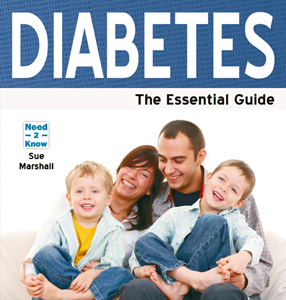
Diabetes – the essential guide has been written by someone who knows all about it as the author, Sue Marshall, was diagnosed with type I diabetes at the age of five. Now 41, she has lived with this condition for more than 35 years so is well qualified to offer advice and understanding on how to deal with the condition.
It is an extremely practical book, containing information about symptoms, diagnosis, types of diabetes and blood testing. It offers information on the types of medication available, and practical advice on how to manage the condition. Special sections on dealing with travelling, being away from home, pregnancy, and children with diabetes are well handled and looked at in detail.
As I found with my own stress book, what people need when dealing with any medical condition is clear, concise and easy to access information — no waffle and no padding. This book certainly delivers that and once you have read through the book and got some understanding about how your diet affects your blood sugar and what you can actually do to handle it successfully you have a practical plan to follow.
Diabetes – the essential guide costs £8.99 from bookshops or direct from the publisher’s website at need2knowbooks.co.uk and Sue Marshall has her own webbsite where she gives information on diabetes health care and related products. You will find it at www.desang.net
Cool Down with Sun Tea
June 29, 2010 by AnnA
Filed under Food & Nutrition

Ever optimistic I see the sun and immediately break out the long-standing sun tea recipe! Tea brewed in the sun really does have a lovely gentle flavour and once in the fridge with lots of ice cubes you will find it a very refreshing, and healthy, drink on a hot day. So instead of reaching for a can of fizzy or a hot cup of tea try this recipe from the southern United States where they know a thing or two about staying cool in extreme temperatures. I first came across it when I was doing an exchange with a women’s’ college in Missouri as a writer in residence and have been making it ever since.
Sun Tea Recipe
The first and most important thing to say is that you must use a glass container that will hold around a litre of water — never, ever, plastic as the sunlight will leach toxins from it into the water. So one large glass container with a lid or cover the top with a saucer if you don’t have one. It could not be simpler, put 4 to 6 teabags into the jar and top up with cold, preferably filtered, water. You can use any teabags, but what I think works best is either green tea or herb tea and personally I use a mixture of the two..
Leave it to brew and steep for 3-6 hours and you will know your tea is ready when the colour has reached the colour of tea as if it was brewed in a tea pot with boiling water.
Sun Tea tends to be a bit milder tasting than normal brewed tea and although you can serve it warm from the sun, I prefer it served with ice and a lemon slice and a few sprigs of mint. Once brewed, but it in the fridge and enjoy it over the next day or two and if you are not sure about what herbal teabags to use then fennel gives an interesting aniseed taste along with the green tea, lemon balm is nicely mild, or any of the spiced tea bags such as the Ayurveda is detox teas. If you are concerned about your high blood pressure, then try mixing the green tea with a couple of Hibiscus teabags as they are known to help reduce it.